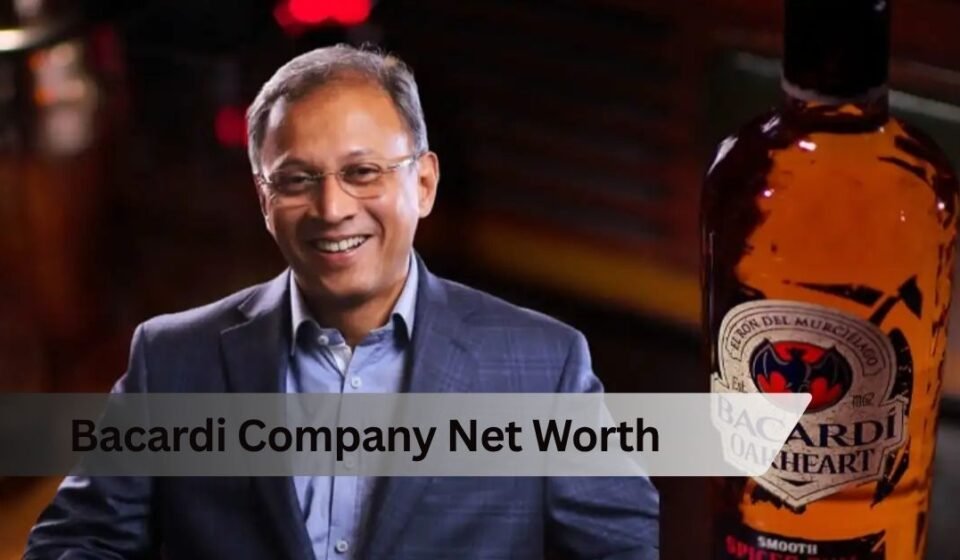

Bacardi has no official net worth, because it is a private company that has never sold shares to the public and does not publish its accounts. The best available figures put the founding family’s stake at roughly $16 billion to $19 billion, built on annual sales estimated between $5 billion and $10 billion. Anything you see stated as a precise Bacardi valuation is an estimate, not a reported number.
That sounds like a dodge, but it is the single most useful thing to know about this question. Once you understand why the number is fuzzy, the real figures underneath it become much easier to read.
What is Bacardi’s net worth?
The company is generally placed somewhere in the teens of billions of dollars. The most credible anchor comes from wealth tracking of the Bacardí family, whose holdings in the business have been valued at about $19 billion. Later estimates have landed closer to $16 billion. Both figures measure the family’s ownership rather than the company’s books, and both are calculations made from outside the business.
The gap between those numbers is not sloppiness. It reflects a few years of movement in the spirits market, which has been soft since 2024, and the fact that each estimate uses a slightly different method.
The honest range: roughly $16 billion to $19 billion for the family’s stake in Bacardi Limited, with no audited figure to confirm it.
Compare that to a listed rival and the difference in certainty is stark. Diageo’s market value sat near $46 billion in mid-2026, a figure you can check any second the market is open. Bacardi has nothing like that. Its worth is inferred, and it moves depending on who is doing the inferring.
Why the estimates disagree with each other
If you search this question you will find numbers that do not match, and it helps to know why before you pick one. Three things drive the spread.
First, the date. A valuation from 2019 was made near the top of a long boom in premium spirits. One made in 2026 reflects two years of falling demand and heavy tariff pressure. The same company can honestly be worth several billion less without anything going wrong internally.
Second, what is being counted. Some figures measure the family’s total wealth, which includes assets held outside the business. Others try to value the company alone. Those are different questions, and the answers can differ by billions.
Third, the multiple used. Value a spirits company at two times sales and you get one answer. Use three times and you get a number half again as large. Neither is wrong, but the choice is a judgement call, and small changes in it swing the result hard.
So the right way to read any Bacardi figure is to ask when it was made, what it covers, and what it was built from. A number without those three details is close to useless.
Why there is no official Bacardi valuation
Bacardi is private, and it has stayed that way on purpose for over 160 years. The family has owned it through seven generations, and there is no serious sign of that changing. Talk of a stock market listing peaked in the early 2000s and went nowhere.
Private ownership has three effects on the number you are searching for:
- No share price. A public company’s worth is share price times share count, updated by the second. Bacardi has no traded shares, so nothing sets that price.
- No published accounts. Listed firms must file audited revenue, profit and debt figures. Bermuda-based Bacardi Limited does not, so outsiders work from trade data and industry estimates.
- No takeover benchmark. When a private company is sold, the price reveals its value. Bacardi has bought plenty of brands and sold almost nothing of itself.
So every published Bacardi valuation is reverse-engineered. Someone estimates the sales, applies a multiple borrowed from listed peers, adjusts for the brand portfolio, and prints a number. That is a reasonable method. It is not a measurement.
How much money does Bacardi make?
Estimates put Bacardi’s annual revenue somewhere between $5 billion and $10 billion, with several commercial databases clustering around $6 billion. Some place it lower, near $4.6 billion. The wide spread again comes from the lack of filings.
What is not in doubt is the scale of the operation. Bacardi employs more than 8,000 people, runs production sites in ten countries and territories, and sells across more than 160 markets. It calls itself the largest privately held international spirits company in the world, and by portfolio size that holds up.
Volume tells a similar story. Bacardí rum ranks among the top-selling rum brands globally, measured in tens of millions of nine-litre cases a year. That is a lot of bottles, and it is only one brand out of more than 200.
The physical assets are worth noting too, because they form part of what the business is worth on paper. Bacardi owns distilleries, ageing warehouses, bottling plants and land across ten countries, including the large rum distillery in Puerto Rico. Maturing whisky and tequila stock alone represents years of tied-up value sitting in barrels, which is one of the reasons spirits companies are expensive to build from scratch and hard to value quickly.
Why revenue matters more than the headline valuation
If you want a sense of what Bacardi is worth, sales are the more useful figure, because valuation is usually built from them. Listed spirits companies in mid-2026 traded at roughly two to three times their annual sales. Apply that band to a $6 billion sales base and you get a company value somewhere around $12 billion to $18 billion.
That is a rough calculation, and it deliberately ignores debt, which matters in real deals. But it shows why the family wealth estimates land where they do. They are not plucked from nowhere.
How the Bacardi family fortune is measured
The family fortune and the company value are close cousins, not the same thing. Ownership of Bacardi Limited is the bulk of it. Beyond that, generations of dividends have been reinvested elsewhere, and the family is now spread across many branches and hundreds of shareholders.
That spread is one reason Bacardi does not appear on some major dynasty rankings. Bloomberg’s annual list of the richest families required a minimum of $46.4 billion to enter in 2025, well above where Bacardi sits, and it also excludes fortunes that are too widely dispersed to value cleanly.
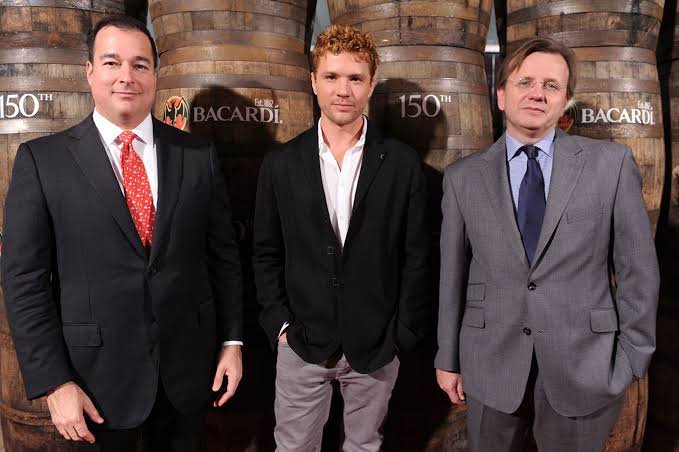
Facundo L. Bacardí, the founder’s great-great-grandson, has chaired the board since 2005. Day-to-day leadership sits with chief executive Mahesh Madhavan, who joined the top job in 2017. Family control plus outside management is a common structure for old private businesses, and it lets the company plan in decades rather than quarters.
How Bacardi compares to Diageo and Pernod Ricard
Bacardi is big, but it is not the biggest. Placing it next to its listed rivals shows both its scale and the limits of what anyone can know about it.
| Company | Rough scale | What that tells you |
| Diageo | About $46 billion market value on roughly $20 billion in sales | The biggest listed distiller, valued at a bit over two times sales in mid-2026 |
| Pernod Ricard | About $18 billion market value on roughly $11 billion in sales | Trades below two times sales after a weak stretch for the sector |
| Bacardi | Sales estimated in the $5 billion to $10 billion range | No share price exists, so any value is a calculation, not a quote |
Two things stand out. Bacardi is comfortably smaller than Diageo by revenue, and closer to Pernod Ricard’s league than to the top spot. And the sector as a whole has had a hard run. Pernod Ricard’s revenue fell 16 percent in its most recent full year, and its shares traded at around 11 times earnings in mid-2026, low for a company with brands that strong.
That matters for your question in a direct way. When listed spirits companies get cheaper, the multiples used to value private ones fall with them. Bacardi’s estimated worth in 2026 is lower than it would have been in 2021 for reasons that have little to do with how well it is run.
What is pushing the whole sector down
Two forces are doing most of the damage. Younger drinkers are buying less alcohol overall, and the long premium boom that carried the industry through the 2010s has started to fragment. People are still trading up on quality, but they are buying fewer bottles.
Tariffs are the second problem. US industry groups warned that proposed duties on European products put around $2 billion of sales and up to 25,000 supply chain jobs at risk. For a company that makes Scotch in Scotland, gin in England, tequila in Mexico and rum in Puerto Rico, and sells heavily into the United States, that is a real cost.
Bacardi is not immune to any of it. The only difference is that you will not see the damage in a quarterly report.
What Bacardi actually owns
The rum is the name on the door, but it is nowhere near the whole business. Bacardi holds more than 200 brands and labels, and the biggest ones were bought rather than built.
| Brand | Category and how it joined |
| Bacardí rum | The original product, made since 1862 |
| Martini | Vermouth and sparkling wine, bought in 1993 |
| Dewar’s and Bombay Sapphire | Scotch whisky and gin, bought in 1998 |
| Grey Goose | Vodka, bought in 2004 |
| Patrón | Tequila, full ownership taken in 2018 |
| Teeling | Irish whiskey, full ownership taken in June 2026 |
The Martini deal in 1993 roughly doubled the company’s size and ended its long run as a one-brand business. Dewar’s and Bombay Sapphire pushed it into the top tier of global spirits firms. Grey Goose and Patrón gave it two of the strongest premium names in vodka and tequila.
The buying has not stopped. In June 2026 Bacardi took full ownership of Teeling Irish whiskey, moving from a 79 percent stake to 100 percent. Terms were not disclosed. The Dublin brand has more than doubled in size since Bacardi first invested in 2017 and now sells in over 80 markets.
Each of these brands adds to the underlying value, and each one is part of why estimates keep landing in the teens of billions. A company with Patrón and Grey Goose on its books is worth far more than a rum maker alone.
Why the brand mix matters to the valuation
Not all spirits sales are worth the same. A bottle of premium tequila or aged Scotch carries a much fatter margin than standard white rum, and buyers pay more for those earnings. That is why the acquisitions matter as much as the volume does.
Bacardi’s portfolio is unusually well spread. Rum, vodka, gin, tequila, Scotch, Irish whiskey, bourbon, cognac, vermouth and liqueurs are all covered. When one category cools, as vodka has in recent years, another can carry the weight. That spread is worth real money, because it makes the earnings steadier and steady earnings command a higher price.
The Teeling deal fits that logic. Irish whiskey has been one of the faster growing categories in spirits, and owning a brand outright rather than at 79 percent means all of the upside stays in the family business.
Can you buy Bacardi stock?
No. There is no Bacardi ticker symbol on any exchange, and no way to buy a direct stake. Shares are held by the family and are not offered to outside investors.
If you want exposure to the same market, the listed alternatives are the obvious route. Diageo, Pernod Ricard, Brown-Forman and Constellation Brands all trade publicly and cover overlapping categories. None of them gives you Bacardí rum, but they track the same premium spirits demand.
Watch out for scam listings that claim to sell pre-IPO Bacardi shares. No such offering exists. If you want to check what the company itself is announcing, its corporate site publishes news releases and leadership changes directly.
Would Bacardi ever go public?
It looks unlikely. Staying private is a stated part of how the family runs the business, and it removes the pressure to hit quarterly targets. The trade-off is exactly the problem you ran into by searching this question: nobody outside the boardroom knows the real numbers.
Frequently asked questions
Is Bacardi worth more than Diageo?
No. Diageo’s market value sat near $46 billion in mid-2026 on about $20 billion of annual revenue. Bacardi’s estimated worth is in the teens of billions, with sales roughly a third of Diageo’s.
Who owns Bacardi today?
The Bacardí family, across seven generations and hundreds of shareholders. Facundo L. Bacardí has chaired the board since 2005, while Mahesh Madhavan has served as chief executive since 2017.
What is Bacardi’s annual revenue?
Estimates range from about $4.6 billion to $10 billion, with several databases settling near $6 billion. The company does not publish audited accounts, so no exact figure is available.
Does Bacardi have a stock ticker?
No. Bacardi is private with no listed shares and no ticker symbol. Any site offering Bacardi stock or pre-IPO shares should be treated as a scam.
How many brands does Bacardi own?
More than 200 brands and labels, including Grey Goose vodka, Patrón tequila, Dewar’s Scotch, Bombay Sapphire gin, Martini vermouth and, since June 2026, Teeling Irish whiskey outright.
Conclusion
Bacardi’s net worth is an estimate, not a fact. The family’s stake has been valued at roughly $16 billion to $19 billion, sitting on sales somewhere between $5 billion and $10 billion a year, with more than 200 brands behind it. Treat any exact figure with suspicion, check its date, and check whether it measures the company or the family. Those two habits will serve you better than memorising one number.
Related Post:
Hilton Family Net Worth: How Much the Hotel Dynasty Is Really Worth
Shoma Group Net Worth: What the Miami Developer Is Really Worth
Sewing Down South Net Worth: What Craig Conover’s Company Is Really Worth
Hidrent Shark Tank Net Worth: What the Firefighter Handyman App Is Worth Now
Boot Illusion Shark Tank Net Worth: Where the Company Stands Today