
The full story of the heels-into-boots idea, the deal that fell apart, and why the money never came.
Boot Illusion is out of business, and its net worth today is effectively $0. The company never generated lasting revenue, its websites are dead, and its social accounts went quiet years ago. On paper, the highest value it ever reached was a valuation of about $181,818, based on a Shark Tank deal that was agreed on camera but never actually closed.
That gap between a good TV moment and a real business is the whole story here. Boot Illusion had a clever product, a memorable pitch, and a handshake with one of the show’s most famous investors. None of it was enough. Below is the full picture: what the product was, what happened in the tank, the exact numbers, and the supply problems that quietly ended everything.
What is Boot Illusion’s net worth today?
Boot Illusion’s net worth is essentially zero. The company is no longer trading, has no active product for sale, and holds no known assets or ongoing income. Its main web address, bootillusions.com, was later listed for sale as a parked domain, and its last product-related social post dates back to early 2014.
The confusion you sometimes see around this figure comes from mixing up two different numbers. One is the valuation, which is what the business was theoretically worth at a moment in time. The other is net worth, which is what it is actually worth now. Boot Illusion’s valuation peaked at roughly $181,818 during the show. Its net worth today, with the company shut down, sits at $0.
It is worth being precise about this, because a valuation and net worth pull in very different directions here. The $181,818 figure assumed the business would take Barbara’s cash, use it, and grow. None of that happened. When a company folds without ever funding its investment or building lasting assets, the valuation stops meaning anything, and the real number falls back to what the shell of the business is actually worth. For Boot Illusion, that is nothing you could sell, which is why $0 is the honest answer to give.
Quick answer: Boot Illusion is closed. Net worth is about $0. The $181,818 figure you may come across was a valuation from an on-air deal that never went through, not money in the bank.
What was Boot Illusion?
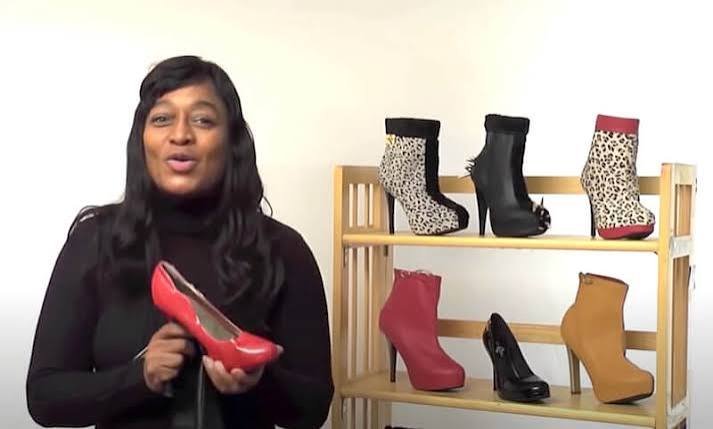
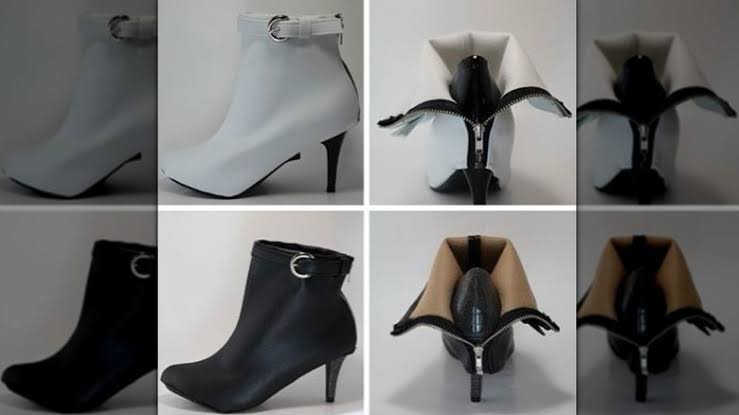
Boot Illusion was a footwear product that turned a regular high heel into a boot. The idea was simple and honestly quite smart: instead of buying a closet full of boots, you buy one pair of heels and a set of slip-on uppers, which are the leather or fabric outer sections that cover the leg and foot.
You zip an upper over your heel, and the shoe looks like a boot. Unzip it, drop it in your bag, and you are back to a heel. The uppers came in different heights, from a short bootie all the way up to a thigh-high look, plus different colors and materials. One base shoe could give you the look of several different pairs.
The pitch to shoppers was mostly about money and space. A single Boot Illusion costs a fraction of a full pair of boots, so you could get the effect of three or four “new” pairs for the price of one, without a rack of boxes taking over your closet. For anyone short on storage or short on cash, that was an easy thing to understand.
The Shark Tank pitch: what happened
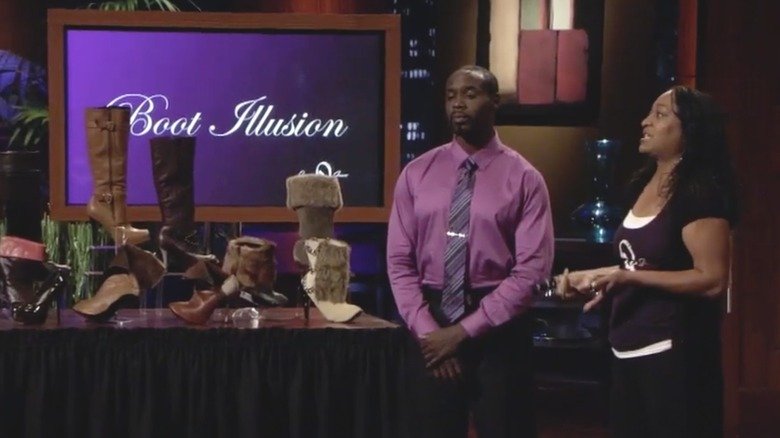
Boot Illusion appeared on Shark Tank Season 3, Episode 13, which aired on May 4, 2012. The founders were Queenie Davis and Andrew Goodrum, business partners from Rochester, New York, who each put around $40,000 of their own money into the company on a 50/50 split.
They walked in asking for $100,000 in exchange for 30% equity, which valued the company at $333,333. To show the product, Queenie wore one plain heel on one foot and one heel with an upper zipped over it on the other, so the Sharks could see the switch in real time. She explained the prototype on her foot cost about $25 to make and was sold directly to customers for $79.99.
The room was split. Robert Herjavec stepped out early, saying women’s shoes and fashion were not his area. Mark Cuban passed for a similar reason. Kevin O’Leary felt the valuation was off and the sales were not there yet, so he was out, too. That left two interested Sharks.
Daymond John, the fashion expert on the panel, wanted the technology rather than the whole company. He offered $100,000 for 75% but structured it as a licensing play, which would have handed him most of the control. Barbara Corcoran took a different route. She liked the product as it was and offered the founders the money they asked for, but in exchange for a bigger slice of the company.
A few numbers from the pitch help explain the Sharks’ reactions. The uppers cost roughly $25 to $32 to make. The plan was to sell them at retail for $129 to $179, and direct to shoppers for $79.99, which is a healthy markup and part of why the product looked appealing. The founders also mentioned they had recently sold about $130,000 of a related product, interchangeable rain boots and sandals, at a trade show. So there was some real selling happening, just not yet for the Boot Illusion uppers themselves, which were still a prototype. That mix of a slim track record and an unproven core product is exactly what made Kevin O’Leary hesitate on the valuation.
The deal that never closed
Barbara Corcoran offered $100,000 for 55% equity. That dropped the valuation from the $333,333 the founders wanted down to about $181,818. Andrew thought giving up more than half the business was too steep. Queenie talked him into it, and they shook on Barbara’s deal on air. Here is how the ask and the on-camera deal compared.
| Detail | The ask | The deal on air |
|---|---|---|
| Money | $100,000 | $100,000 |
| Equity given up | 30% | 55% |
| Implied valuation | $333,333 | $181,818 |
| Investor | Any of the five | Barbara Corcoran |
On television, that looked like a win. In reality, the handshake was the high point, and nothing was final. A Shark Tank deal agreed on camera still has to survive due diligence after filming, and this one did not. Barbara later looked more closely at the business and decided it was not as far along as she had hoped, so she never sent the money. By the founder’s own account, the company simply was not ready.
The $181,818 valuation is the number most people repeat, but it only ever existed as a proposed deal. The investment was never funded, so it never became real net worth.
Why Boot Illusion went out of business
The deal falling through hurt, but it did not have to be fatal. Plenty of companies keep going after a Shark Tank deal collapses. What actually sank Boot Illusion was manufacturing. The company could not reliably make its product, and without a product, there was nothing to sell.
At the time of filming, Boot Illusion was still only at the prototype stage. The founders had lined up a manufacturer in Turkey to handle production. That was the plan the whole business leaned on. Then the plan broke.
Here is the chain of events that followed, roughly in order:
- The Turkish factory fell through. The manufacturer Queenie had arranged could not meet their needs, and that arrangement collapsed. The company suddenly had no one to make its shoes.
- They switched to Brazil. The founders found a new manufacturer in Brazil and aimed to have the product ready for the Christmas 2012 shopping season, which is the make-or-break window for a lot of retail.
- The materials got stuck in customs. The fabric that Queenie shipped to Brazil was held up in customs and arrived far too late for the factory to hit the holiday deadline.
- They had to refund everyone. Boot Illusion had already taken orders and deposits from both wholesalers and individual shoppers. With no product to ship, they returned all of that money.
- The website mess made it worse. An old site kept promising a catalog that never appeared, and a newer site had no link connecting it to the old one, so customers who came looking often hit a dead end.
Production was pushed toward March 2013, but the disruptions kept coming, and it never got back on track. Missing the holiday season, refunding orders, and losing months to failed factory hunts drained both money and momentum. The founder stayed hopeful for a while and talked openly about fighting to keep going, but the business quietly closed soon after.
Where are the founders now?
Public traces of Queenie Davis and Andrew Goodrum’s work on Boot Illusion mostly stop in the mid-2010s. The brand’s last product-focused social post came in February 2014, and a lone later Instagram post from January 2023 shared only a fashion quote rather than any product news. There has been no announced revival and no relaunch.
The company’s assets have wound down in the way dead brands usually do. The bootillusions.com domain ended up parked and listed for sale rather than pointing to a working store. There is no active shop, no catalog, and no way to buy a Boot Illusion today. For anyone searching for a comeback story here, there simply is not one on the record.
If you want to see how the original moment played out, the episode itself is still catalogued on its IMDb episode page, which lists the founders alongside the other entrepreneurs who pitched that night.
How does it compare to other Shark Tank shoe ideas
Boot Illusion was not the only convertible footwear pitch the show has seen, which puts its failure in a useful context. The idea of one shoe that becomes many has tempted several founders, and the results have been mixed.
Jeska Shoe Company pitched heels that let you mix and match the actual heel piece. Muvez brought slippers that turn into outdoor shoes by stepping into a separate sole. Pashion Footwear built heels that convert into flats, and that brand managed to grow into a real, funded business. The pattern is clear enough: the convertible-shoe concept can work, but only for the teams that solve making and shipping at scale.
That is the line Boot Illusion never crossed. The concept was arguably one of the more eye-catching of the bunch, and the on-air demo of one heel versus one boot was genuinely convincing. What separated the survivors from Boot Illusion was not the strength of the idea. It was whether the company could reliably turn that idea into boxes on a shelf, month after month. Boot Illusion could not, and no amount of on-screen charm closed that gap.
What the Boot Illusion story teaches
Boot Illusion is a clean example of a truth that comes up again and again with Shark Tank companies: a great idea and a great pitch are only the start. The product solved a real problem, the demo was memorable, and it won over a top investor on camera. The business still failed, because the parts nobody sees on TV were not solid.
A few plain lessons stand out:
- A handshake on air is not a funded deal. Many televised deals change or die during the checks that happen after filming. The money is real only once it lands.
- Supply chain is the business. Depending on a single overseas factory with no backup left, Boot Illusion has no way to make the product the moment that factory falls through.
- Timing can be everything in retail. Missing one holiday season and then having to refund the orders you did win can quietly end a small company.
- Being ready matters as much as being clever. The deal collapsed largely because the company was still at the prototype stage and not far enough along to invest in.
For a wider view of how footwear brands try to stand out, industry groups like the Footwear Distributors and Retailers of America track just how crowded and competitive the shoe market is, which is part of why breaking in is so hard, even with a fresh idea. Boot Illusion had the idea. It was the everyday grind of making and shipping shoes that it could not get past.
Frequently asked questions
What is Boot Illusion’s net worth in 2025?
It is effectively $0. Boot Illusion is no longer in business, has no product for sale, and holds no known assets. Its peak valuation of about $181,818 came from a Shark Tank deal that was never actually funded.
Did Boot Illusion get a deal on Shark Tank?
Yes and no. On camera, Barbara Corcoran offered $100,000 for 55%, and the founders accepted. After filming, she reviewed the business, decided it was not ready, and never sent the investment, so the deal never closed.
Who were the founders of Boot Illusion?
Queenie Davis and Andrew Goodrum are business partners from Rochester, New York. They each invested about $40,000 in an even 50/50 partnership and pitched together on Shark Tank Season 3, Episode 13, in 2012.
Why did Boot Illusion go out of business?
Manufacturing killed it. Their Turkish factory fell through, a Brazilian backup was hit by a customs delay, and they missed the Christmas 2012 season. They had to refund orders and never got production back on track.
Can you still buy Boot Illusion products?
No. The company is closed, its websites are inactive, and the main domain was later parked for sale. There is no active store, catalog, or way to order the shoe uppers today, and no announced revival.
Conclusion
Boot Illusion is out of business, so its net worth today is effectively $0. It reached a peak valuation of about $181,818 through Barbara Corcoran’s on-air offer of $100,000 for 55%, but that deal was never funded, and the company never scaled. A collapsed factory in Turkey, a customs delay in Brazil, refunded orders, and a missed holiday season ended it. The takeaway is simple: a smart product and a TV handshake mean little without a supply chain that actually works.
Recommended Articles:
Cerebral Success Shark Tank Net Worth: What the Company Is Worth Today
Copa Di Vino Net Worth: What the Brand Is Really Worth in 2026
Sphere Entertainment Co.’s Net Worth: What SPHR Is Really Worth in 2026
X-Craft Net Worth: What the Drone Company Is Actually Worth in 2026