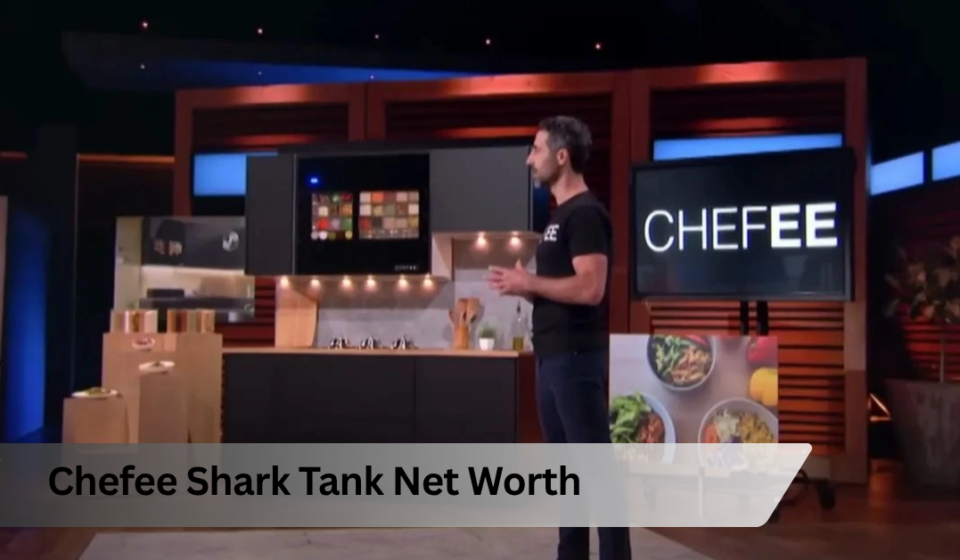

Chefee has no published net worth. It is a private, pre-revenue startup, so there is no audited figure sitting anywhere to report. The number most people are looking for is the company’s valuation, and that one is on the record. Kevin O’Leary’s offer of $500,000 for 15% put Chefee at roughly $3.33 million. Founder Assaf Pashut walked in asking for $500,000 for 4%, which priced the company at $12.5 million. Here is where those figures come from, and where the business stands now.
What is Chefee’s net worth?
Chefee’s working valuation is about $3.33 million, set by the deal agreed on air in March 2024. That is not money in a bank account. It is simply what the whole company would be worth if every share sold at the price O’Leary agreed to pay for his slice.
There is no revenue figure to sit next to it. Chefee was pre-revenue when the episode was taped, and no customer deliveries have been confirmed since. A business with no sales has no earnings to value, so any dollar amount attached to Chefee is a price investors were willing to name, not a measure of what the company has made.
Here are the numbers that are actually documented.
| Detail | Figure |
|---|---|
| Founder and CEO | Assaf Pashut |
| Company | Chefee Robotics, Inc., Austin, Texas |
| Founded | 2021 |
| Shark Tank episode | Season 15, Episode 17, aired March 8, 2024 |
| The ask | $500,000 for 4% equity |
| Valuation implied by the ask | $12.5 million |
| Deal made on air | $500,000 for 15% from Kevin O’Leary |
| Valuation implied by the deal | About $3.33 million |
| Revenue at time of taping | None, pre-revenue |
| Disclosed outside funding on record | About $500,000 |
How the Shark Tank pitch actually went
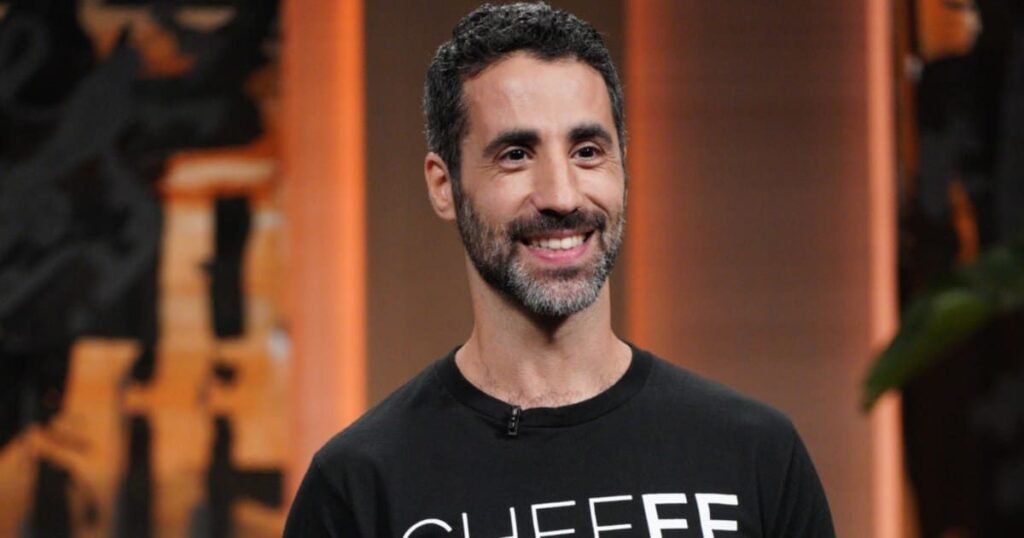
Pashut did something few founders attempt: he brought the machine itself into the Tank and cooked with it live. Chefee turned out Spanish paella, spicy ratatouille and tofu tikka masala while the Sharks watched.
The product is a kitchen you talk to. A refrigerated pantry sits where your upper cabinets are and holds ingredients in slide-out bins. Below it, a cooking unit portions everything and cooks the dish. You plan meals in an app, pick servings and dietary limits, and the system can reorder groceries through services like Amazon Fresh and Instacart.

The demo landed. The business case did not, at least not with most of the panel. The Sharks pushed hard on servicing and repairs, on how a team of a few people would manufacture at scale, and on whether enough buyers would pay luxury-appliance money for a machine that cooks dinner. Mark Cuban questioned whether this was really a robotics company or a clever integration of parts other people had built. Barbara Corcoran, Lori Greiner and Robert Herjavec all passed.
Kevin O’Leary stayed in. He liked the high-end angle and the chance of licensing the technology to a premium appliance brand such as Sub-Zero or Wolf. Chefee also had a $500,000 signed letter of intent from a luxury kitchen remodeler in Palm Springs, which gave the pitch something concrete to point at even with no sales. O’Leary’s offer was $500,000 for 15%. Pashut tried to talk him down to 8%, then took the original terms.
One detail worth holding on to when you read the valuation: the episode was filmed in September 2023 and aired six months later, in March 2024. The $3.33 million figure describes a company that existed in late 2023, not the one that exists now. Pashut and his team shipped their equipment to Los Angeles and built the kitchen set themselves in an investor’s backyard, which tells you roughly what stage the business was at.
The gap between the two valuations is the whole story. Pashut priced Chefee at $12.5 million. The only Shark willing to write a check priced it at less than a third of that.
Net worth and valuation are not the same thing
Valuation is a price. Net worth is what is left after debts. Mixing them up is why the same company can be described as worth millions and still be running on fumes.
For a private startup, valuation is straight arithmetic on the last investment. Divide the money put in by the share of the company it buys. O’Leary’s $500,000 for 15% works out at $500,000 divided by 0.15, or about $3.33 million. Pashut’s own ask of $500,000 for 4% gives $12.5 million by the same sum. Neither number was checked by an accountant. They are just the terms two people agreed on camera.
Net worth means assets minus liabilities: prototypes, tooling, patents and cash, less whatever the company owes. Private firms do not publish that, and a hardware startup burning money on research often has a small or even negative one while its valuation runs into the millions. So when a figure gets attached to Chefee, it is a valuation, not a balance sheet.
Did Kevin O’Leary’s deal actually close?
There is no confirmation that it did. A handshake on air is not a closed investment. Deals go into due diligence after filming, and a large share of them quietly fall apart there.
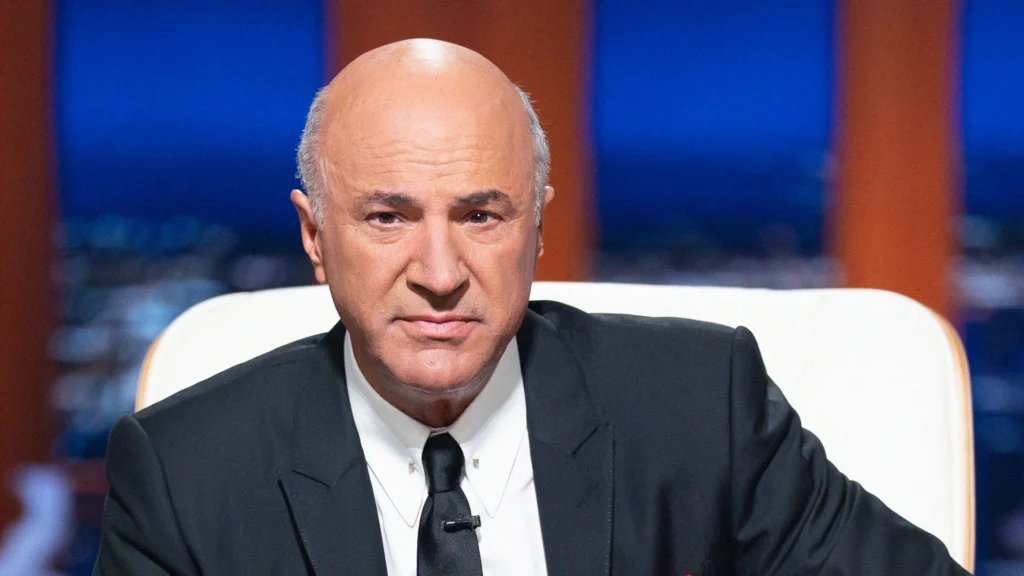
Two things point the same way with Chefee. O’Leary’s name does not appear as an investor on the company’s own site, which refers to the Shark Tank appearance rather than to funding from it. And public funding records for Chefee still show about $500,000 in outside investment, logged as a pre-seed round in February 2024, before the episode aired.
What did carry over was the strategy. Chefee went after the top of the market first, exactly as O’Leary argued it should: sell a small number of expensive units, look after every customer, and bring the price down later as production scales. Whether money ever changed hands alongside that advice has never been confirmed either way.
How much money has Chefee raised?
Chefee walked into the Tank with roughly $540,000 behind it: about $450,000 from outside investors and $90,000 of Pashut’s own money.
Public funding records still list around $500,000 in disclosed outside investment, recorded as a pre-seed round in early 2024. In October 2024, Chefee announced a $16 million seed round to fund research, expand its engineering team and push production forward. That larger figure has not appeared in the databases that track private funding rounds, which still show the smaller number.
Either way, this is a lean operation by robotics standards. Pashut and a handful of colleagues worked through more than 30 prototype versions of the machine before the episode aired, doing much of the mechanical design and 3D printing themselves. The first version was a full commercial kitchen built around a robotic arm on a rail, which he scrapped because industrial arms are expensive, hard to maintain and genuinely dangerous around children.
Is Chefee still in business, and can you buy one?
Chefee is still operating, and no, you cannot yet buy a finished unit and have it installed next week.
The company runs an active site, takes refundable $250 reservations and points to 2026 for production. Early reservation holders were offered $1,000 off the purchase price and $1,000 of groceries. The original delivery target was Christmas 2024. That date passed, along with several others, and no deliveries to private homes have been confirmed.
The pitch to buyers is that you restock the pantry once a week and then stop thinking about cooking. The app carries a library of more than 5,000 recipes, you can add your own, and the machine handles portioning and cooking for the meals you schedule. That once-a-week promise is why the company has resisted shrinking Chefee into a countertop gadget, since a smaller unit would need refilling before every meal.
Pricing has moved as the product has changed. Around the time of the pitch, Pashut described a base unit near $9,500 and a fully refrigerated premium version in the $40,000 to $50,000 range. Current reservation pricing starts near $35,000, runs to about $75,000 for a hospitality model aimed at hotels and restaurants, and adds roughly $2,500 for each extra module such as an air fryer or bread maker. The live figures are on Chefee’s own site.
The price band is a deliberate choice rather than an accident. Buyers at the top of the kitchen market already spend $50,000 on a range hood and six figures on a La Cornue or Sub-Zero fit-out, and they are used to installation and service calls. Chefee is built to suit them: it slides into existing upper cabinets in about two hours, needs no permanent alteration to the kitchen, and comes out again if you move house. Pashut set out the reasoning for launching at the luxury end in a 2024 conversation with The Spoon, and it is the clearest explanation of the company’s plan available.
What is Assaf Pashut worth?
There is no public figure for Pashut’s personal net worth, and any number you come across is guesswork.
What can be worked out is the paper value of his stake. If the O’Leary deal had closed on the stated terms, Pashut would still hold the large majority of a company valued at $3.33 million, so his share would be worth low seven figures on paper. Paper is the operative word. Shares in a private, pre-revenue company cannot be sold easily, and they are worth nothing at all if the product never ships.
Before Chefee he ran a fast-casual falafel chain in the San Francisco Bay Area, then led 7D Robotics, which built automation for restaurant kitchens. The idea for a home robot came during the pandemic, when his restaurants collapsed and he spent a year in Israel staring at a kitchen and wondering what it would take to talk to it.
Frequently asked questions
What is Chefee’s net worth in 2026?
There is no published net worth. The last public valuation is about $3.33 million, taken from the Shark Tank deal terms. Chefee is still pre-revenue, so there are no earnings or balance sheet figures behind a higher number.
Did Chefee get a deal on Shark Tank?
Yes. Kevin O’Leary offered $500,000 for 15% equity and Assaf Pashut accepted it after failing to negotiate the stake down to 8%. Whether the investment closed after filming has never been confirmed.
How much does a Chefee robot cost?
Reservation pricing starts near $35,000 for a home unit and reaches about $75,000 for the hospitality model, with extra modules around $2,500 each. A refundable $250 reservation holds your place in the queue.
Is Chefee still in business?
Yes. The Austin company still runs its website, takes reservations and points to 2026 for production. It operates with a small team and has not confirmed any deliveries to private homes.
Why did the Sharks value Chefee so much lower than Assaf asked?
Chefee had no sales, no manufacturing at scale and a product that needs servicing in people’s homes. Asking $12.5 million for a pre-revenue prototype is a hard sell, so the one offer came in at under a third of that.
Conclusion
Chefee’s net worth is really a valuation, and the figure that counts is about $3.33 million, set by Kevin O’Leary’s on-air offer of $500,000 for 15% in March 2024. The company was pre-revenue then and has not confirmed a customer delivery since, while reservations, prices and production dates have all shifted. Until units ship and money comes in, treat any number attached to Chefee as a price someone was willing to name, not proof of what the business has earned.
Related Post:
MMR Group Net Worth: What’s Actually Known About the Company’s Value
Banana Loca Net Worth: What the Company Is Actually Worth After Shark Tank
Red Dress Boutique Net Worth: What the Company Is Worth Today
Round21 Shark Tank Net Worth: Valuation, Sales and Where the Brand Stands Now
Sweep Easy Net Worth: What the Shark Tank Broom Company Is Worth Today