
A clear look at the numbers behind the Idaho drone maker
The clearest number for X-Craft is its market cap of about $2.92 million, based on its publicly traded stock as of October 2025. Its last private valuation, set by a 2021 fundraising round, was $34 million. Those two numbers are far apart, and that gap is the whole story. X-Craft is a small American drone maker from Coeur d’Alene, Idaho, best known for a wild Shark Tank pitch where all five Sharks wanted in.
If you have searched for a single tidy figure, you have probably seen guesses ranging from $8 million to nearly $49 million. Below is what each of those numbers really means, where they come from, and which one to trust.
The short answer most people want is the market cap, because it is the only figure tied to a real, checkable price. Everything else is either an older snapshot or an educated guess. That does not make the other numbers useless, but it does mean you should know which one you are looking at before you repeat it.
So what is X-Craft actually worth?
It depends on which measure you use, because X-Craft has two very different price tags attached to it.
The first is its market capitalization, or market cap. That is the price of one share times the number of shares. X-Craft trades on the OTC Pink Sheets, a market for small stocks, under the ticker XCFT. As of October 2025, the share price sat at $1.95, which put the market cap at roughly $2.92 million. This is the most verifiable figure because anyone can look up the live share price.
The second is its private valuation, the price investors agreed to when the company last raised money. In December 2021, X-Craft raised about $2.2 million on the crowdfunding platform StartEngine at a $34 million valuation. That is the origin of the $34 million figure you see repeated so often.
Here are the main numbers side by side so you can see how they compare.
| Figure | Amount | What it measures |
|---|---|---|
| Market cap (OTC) | About $2.92 million | Public share price times shares outstanding, Oct 2025 |
| Last private valuation | $34 million | Set by the December 2021 StartEngine raise |
| Annual revenue | Around $6 million | Estimated yearly sales, most recent public figure |
| Total crowdfunding raised | About $3.6 million | Two StartEngine rounds plus early Kickstarter |
The short version: the $2.92 million market cap is the number you can check today. The $34 million valuation is a snapshot from a 2021 funding round, not a live price.
Why the net worth figures are all over the place
A company’s “net worth” is a fuzzy idea for a small business, and X-Craft is a good example of why. Different measures give very different answers, and each one is fair in its own way.
The $34 million valuation is a private number. It reflects what investors were willing to pay in one funding round, not what the company would fetch if sold today. Private valuations can be optimistic, and they go stale quickly.
The $2.92 million market cap is a public number, but it comes with a catch. XCFT is thinly traded, with average daily volume of only a few hundred shares. When a stock barely trades, its price can swing on tiny buy or sell orders, so the market cap is real but shaky.
Then there is revenue, which some articles convert into a valuation using a rule of thumb. Drone companies in defense and enterprise often sell for two to five times their yearly sales. At around $6 million in revenue, that math lands X-Craft somewhere between $12 million and $30 million. It is a reasonable estimate, but it is an estimate, not a confirmed price.
So when you see a number like $8 million, $17 million, $35 million, or $48 million, it usually comes from one of these methods, or from an older snapshot in time. None is exactly wrong. They just measure different things on different dates.
The Shark Tank deal that never closed
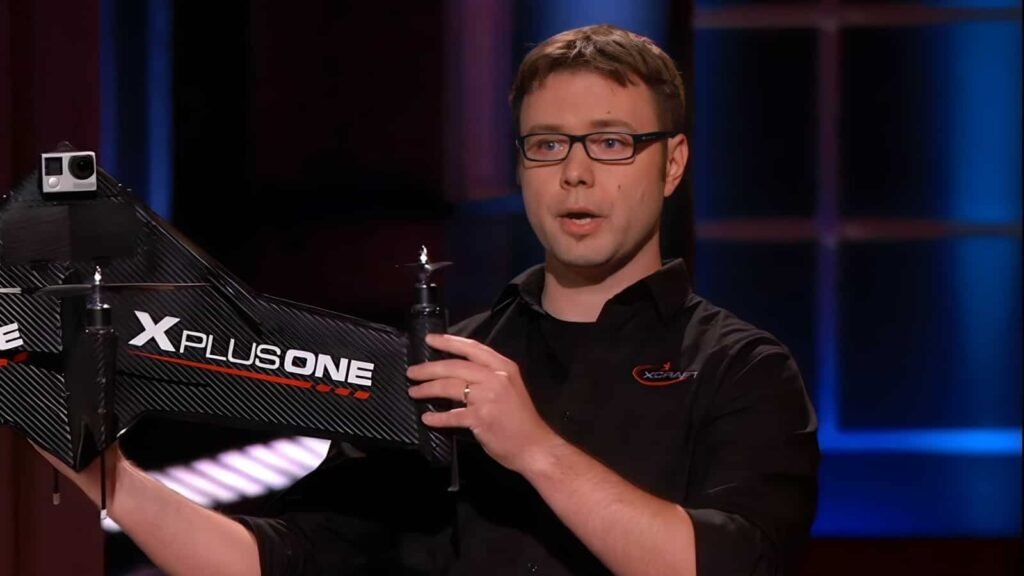
X-Craft went on Shark Tank Season 7 in 2015, and the pitch became a bit of TV history. Founders JD Claridge and Charles Manning asked for $500,000 in exchange for 20% of the company, which implied a $2.5 million valuation.
The Sharks loved the product. What happened next was rare: all five agreed to invest together, landing on a combined deal of $1.5 million for 25% of the company. That valued X-Craft at $6 million on air, more than double the founders’ original ask.
But the deal never closed. After filming, during due diligence, the Sharks stepped away, and no money changed hands. This is more common than most viewers realize. A verbal yes on the show often falls apart later over valuation disagreements, paperwork, or a change of direction. No official reason was ever given.

The exposure still helped. When the episode aired, so many people visited the X-Craft website that it crashed. The founders used that attention to launch a Kickstarter campaign, raising over $170,000 in pre-orders for their drones. So the collapsed deal turned into free national advertising, which is arguably worth more than the investment would have been.
How X-Craft funded itself instead
Without the Shark money, X-Craft turned to equity crowdfunding, where many small investors each buy a slice of the company. This became its main way to raise cash.
The company ran two campaigns on StartEngine. The first, in 2018, raised over $1 million. A second, in July 2022, added more than $130,000. Together with the earlier Kickstarter and other backing, X-Craft has raised somewhere around $3.6 million over the years.
That crowdfunding path is also why X-Craft ended up as a public stock. Its shares now trade on the OTC Pink Sheets, so any investor can buy in. If you want to check the live details for yourself, the ticker XCFT is listed on
You can follow the current share price and filings through public listings such as Yahoo Finance, which shows the stock trades over the counter rather than on a major exchange like the Nasdaq.
Being public sounds impressive, but for a company this size it mostly means the shares are available, not that the company is large. With a market cap under $3 million and very light trading, XCFT behaves like the small, speculative stock it is.
It helps to understand what equity crowdfunding actually is, because it shaped everything about how X-Craft raised money. Instead of pitching a handful of venture capital firms for a large check, the company sold small stakes to a big crowd of everyday backers online. Each person might put in a few hundred or a few thousand dollars in return for shares.
That difference matters for the value question. Venture-backed drone companies in the defense space have raised far larger sums and carry much bigger valuations. X-Craft chose a slower, more grassroots path, which kept it independent but also kept it small. Its roughly $3.6 million raised over many years is a modest total by industry standards, and it explains why the company still runs lean with under 10 staff.
What the company looks like today
X-Craft in 2026 is more active than it has been in years, though it is still a small business. It runs out of Coeur d’Alene, Idaho, with fewer than 10 full-time staff, adding temporary workers when production ramps up.
The company reports year-over-year revenue growth of over 400%. That sounds explosive, but Claridge has been honest that it comes from a low starting point after some hard years, so the real dollar figures are still modest. The most recent public sales estimate is around $6 million a year.
A big early misstep was consumer drones. Selling directly to hobbyists proved hard against cheap competition, so by 2022 X-Craft had exited that market and pivoted to business and government customers. Today its work falls into a few clear areas.
Where the money comes from now
- Public safety and mapping: drones for firefighting, search and rescue, law enforcement, surveying, and infrastructure inspection.
- Defense: in September 2025, X-Craft demonstrated its drones to U.S. Navy SEAL leaders in San Diego. That is an evaluation, not a signed contract, but it shows the company is on the military’s radar.
- Drone light shows: a newer line of business. In June 2025, X-Craft ran a 15-minute choreographed drone show over the Coeur d’Alene Resort, pitched as a quieter, pet-friendly alternative to fireworks.
- Retail: In September 2025, Best Buy placed a $1 million purchase order with X-Craft, aiming to fill shelf space left by Chinese maker DJI as U.S. pressure on Chinese drones grows.
That Best Buy order matters because it hints at a return to consumer sales after years of purely business focus. Whether it lifts the company’s value depends on things we cannot see yet: fulfillment, profit margins, and whether the relationship grows. For now it is a promising order, not a proven windfall.
The drones themselves
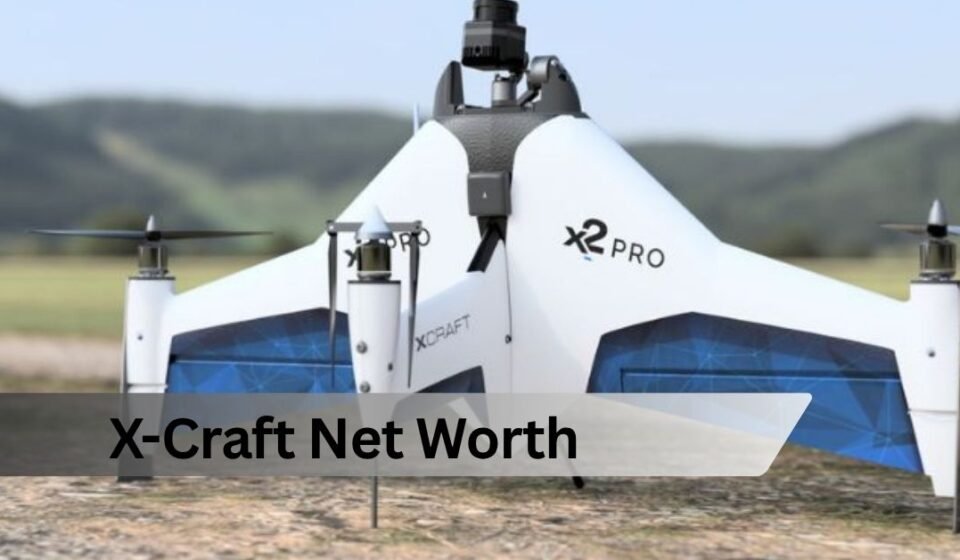
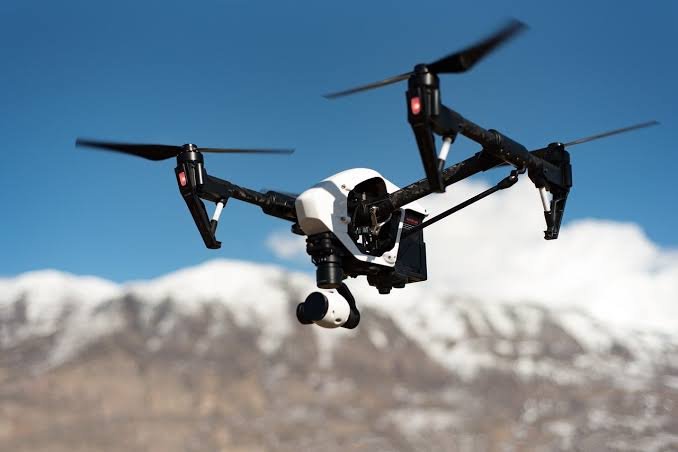
X-Craft made its name on an unusual design. The original X PlusOne was part drone, part airplane. It took off and hovered like a normal quadcopter, then tilted 90 degrees in the air and flew forward like a fixed-wing plane, reaching speeds around 60 mph and heights up to 10,000 feet. That mix of hover and speed is still the idea behind much of its lineup.
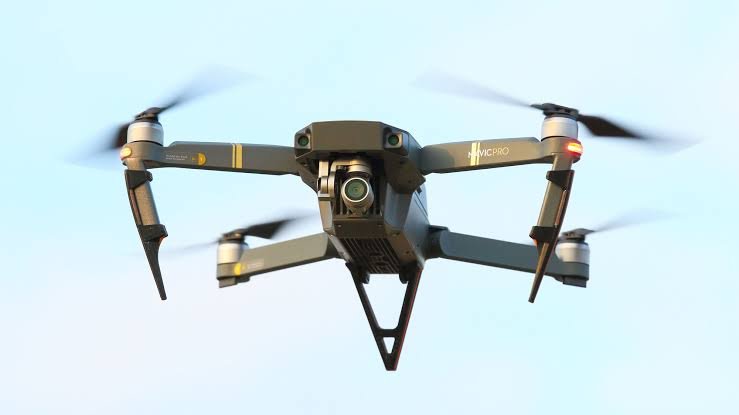
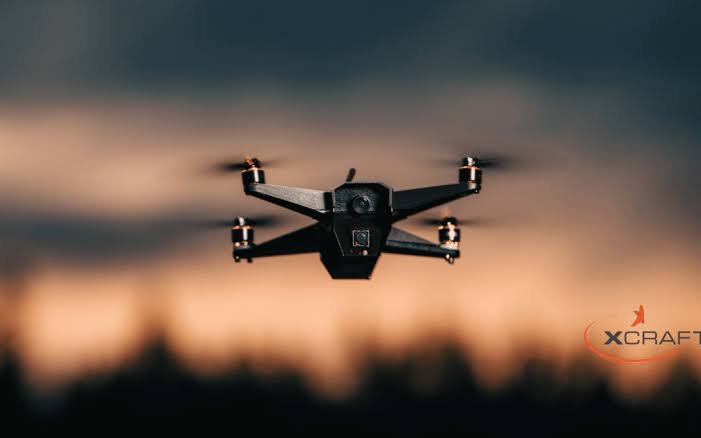
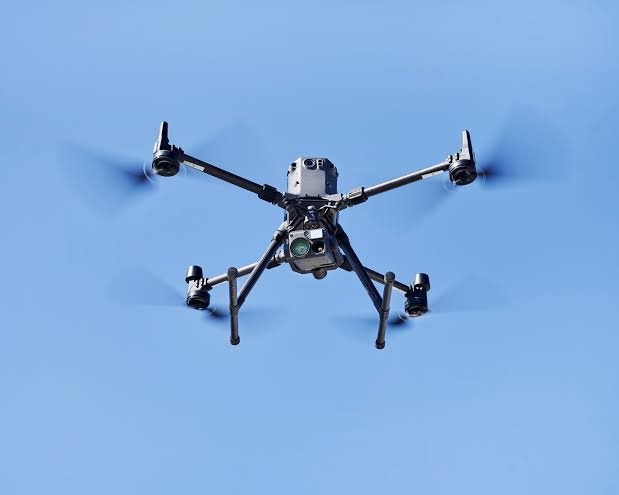
Its current products are built for work, not play. The company offers tethered drones that stay in the air for long stretches using a power cable, useful for pop-up surveillance or communications. It makes VTOL mapping drones, where VTOL means vertical takeoff and landing, for surveyors and engineers who need precise, autonomous aerial maps. It also builds smaller, rugged drones aimed at military and public safety users who need something that can take a beating in the field.
This is a very different catalog from the flashy consumer gadget that first got attention on television. The pivot from a $1,500 hobby kit to industrial and defense hardware is the single biggest change in the company’s history, and it explains why its customers today are agencies and businesses rather than weekend flyers.
The bigger tailwind is politics. As Washington tightens rules on Chinese-made drones, American makers like X-Craft could pick up business that once went to DJI. You can read the official stance on Chinese drone security concerns from the
The security review of Chinese drones is explained on the U.S. Cybersecurity and Infrastructure Security Agency site, which lays out why federal buyers are steering away from foreign-made systems.
Is X-Craft a good investment?
This is not financial advice, and X-Craft is a high-risk, speculative stock, so treat any figure here as a starting point for your own research rather than a recommendation.
The honest picture is mixed. On the plus side, X-Craft has survived where many drone startups folded; it has real revenue and real growth, and it sits in a market with political wind at its back. The Best Buy order and defense interest are genuine signs of momentum.
The political angle is worth understanding, because it is the strongest reason to be hopeful about the company. For years, Chinese maker DJI dominated the drone world by building at huge scale and selling at very low prices. American makers struggled to compete on cost. That balance is now shifting. In December 2024, the National Defense Authorization Act for fiscal year 2025 required a national security review of DJI and other Chinese drones. Around the same time, U.S.
This is exactly the gap the Best Buy order is meant to fill. Claridge has pointed to a defense drone market he estimates in the billions of dollars, and even a small slice of that would dwarf the company’s current sales. The catch is that opportunity is not the same as revenue. Plenty of small firms are chasing the same opening, and larger, better-funded American drone companies are chasing it too. X-Craft has a head start in survival and brand recognition, but it is not the only player who spotted this door opening.
On the cautious side, this is a tiny company. The stock barely trades, which makes it easy to buy at a bad price and hard to sell in a hurry. The eye-catching growth rate comes off a low base, and the company has posted net losses in past years. The gap between its $34 million paper valuation and its sub-$3 million market cap is a warning that optimism and reality have not lined up.
Frequently asked questions
Is X-Craft publicly traded?
Yes. X-Craft trades on the OTC Pink Sheets under the ticker XCFT, so anyone can buy shares. It is not on a major exchange like the Nasdaq, and the stock is thinly traded, meaning very few shares change hands each day.
Did X-Craft get a deal on Shark Tank?
On air, yes. All five Sharks agreed to invest $1.5 million for 25% of the company in 2015. The deal fell apart afterward during due diligence, and no money was ever invested, which is fairly common for Shark Tank pitches.
How much revenue does X-Craft make?
The most recent public estimate is around $6 million a year. The company also reports over 400% year-over-year growth, though its founder notes that jump comes from a low starting point after several difficult years.
What does X-Craft make now?
Commercial and government drones. Its main areas are public safety and mapping, defense, and drone light shows. It recently landed a $1 million Best Buy order, signaling a possible return to consumer sales after exiting that market in 2022.
Why do net worth figures for X-Craft differ so much?
Because they measure different things. The $2.92 million market cap is a live public price, the $34 million is a 2021 private valuation, and revenue-based estimates sit in between. Each is fair, but they track different numbers on different dates.
Conclusion
X-Craft is worth about $2.92 million by its October 2025 market cap, the one figure you can actually verify, while its last private valuation was $34 million on roughly $6 million in yearly sales. The wide range of numbers online reflects different measures, not a single truth.
Treat the market cap as today’s reality check, view the $34 million as an aging snapshot, and remember this is a small, thinly traded company with promising but unproven momentum in defense and retail.
Recommended Articles:
Cerebral Success Shark Tank Net Worth: What the Company Is Worth Today
Copa Di Vino Net Worth: What the Brand Is Really Worth in 2026
Sphere Entertainment Co.’s Net Worth: What SPHR Is Really Worth in 2026