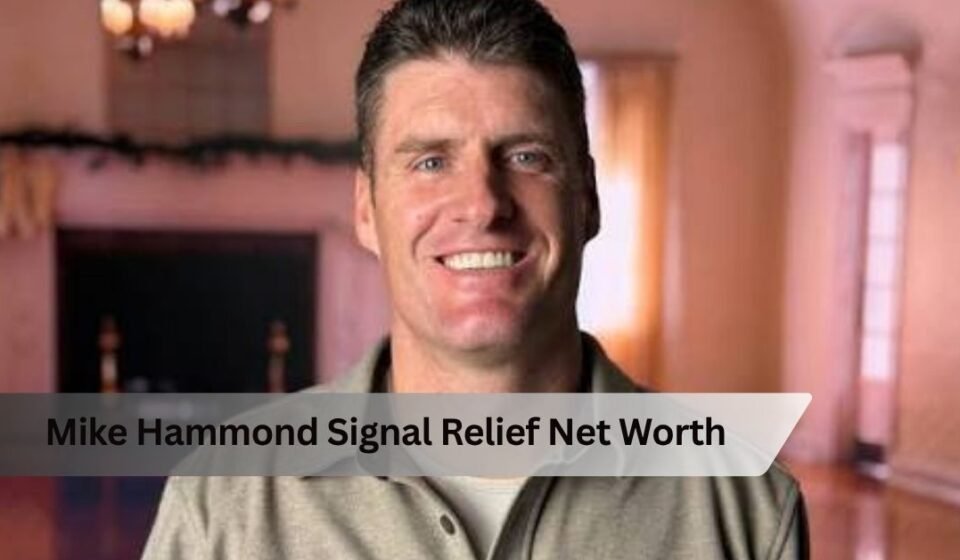

A straight look at the numbers, the man, and the business behind the patch.
There is no verified public net worth figure for Mike Hammond, the founder of Signal Relief. He builds and runs private companies, and private owners don’t file their finances anywhere that the public can check. So any exact dollar amount you see attached to his name is a guess, not a confirmed number.
That is the honest answer. But it probably isn’t the whole reason you searched. Most people typing his name want to know something simpler: is this guy for real, and has he actually built anything? That part we can answer with facts. Here is what is known, what isn’t, and why the number is so hard to pin down.
Is there a real net worth figure for Mike Hammond?
No. A reliable net worth figure does not exist in public records for the Mike Hammond who founded Signal Relief. Net worth is easy to estimate for people who run public companies, because their share holdings and pay are filed with regulators and updated often. Mike Hammond isn’t in that group.

You will find Michael Hammond’s entries in U.S. Securities and Exchange Commission filings, but those belong to different people at unrelated public firms. They are namesakes, not the Signal Relief founder. Matching a common name to the wrong filing is one of the fastest ways a made-up figure gets started.
Bottom line: Any specific net worth number you see for Mike Hammond of Signal Relief is an estimate someone made up, not a figure from any official source.
Who is Mike Hammond?
Mike Hammond is a longtime entrepreneur based in Rexburg, Idaho, where he lives with his wife Jill and their six children. He earned a finance degree from Brigham Young University-Idaho and later an MBA. Before any of his companies existed, he sold door-to-door and ranked among the top pest-control salesmen in the country in the early 2000s.
He describes himself as a serial entrepreneur, and the record backs that up. He has started, co-founded, or led a string of businesses across very different industries: satellite TV, pest control, landscaping, dental care, and, most recently, drug-free pain relief. Signal Relief is the one who put his name in front of a wider audience.

What businesses has Mike Hammond built?
His track record matters more than a headline number because it shows the kind of operator he is. Here are the ventures tied to his name and what each one is.
| Company | Industry | His role/note |
|---|---|---|
| Signal Relief | Wellness/pain relief | Co-founder, launched late 2019 |
| Caliber Smart (formerly DishOne) | Satellite TV / smart home | Founder and owner; became a top Dish Network dealer |
| BioGuard Pest Control | Pest control | Founder; grew it, then sold to Terminix in 2012 |
| BioShield Pest Control | Pest control | Co-founder |
| MD Nursery & Landscaping | Landscaping/retail | Managing partner |
| Oak Haven Dental | Dental care | Co-founder |
Two things stand out. First, he has built companies big enough to attract buyers, selling one pest-control business to Terminix and growing his satellite venture into a leading dealer that Dish Network later took a controlling stake in. Second, he keeps starting fresh in new fields. That pattern suggests real business skill, even though it tells us nothing exact about his personal wealth.
Why does no reliable net worth number exist
The gap comes down to how private ownership works. A few plain reasons explain it.
- Private companies keep their books private. Signal Relief and its other firms don’t publish revenue, profit, or ownership splits, so there is nothing public to value.
- Ownership is usually shared. He co-founded several ventures, so he holds a slice, not the whole thing. Even a company’s total value wouldn’t equal his personal cut.
- Sale prices weren’t disclosed. The Terminix and Dish deals were real, but the amounts he personally received were never made public.
- Wealth isn’t just cash. Business stakes, property, and reinvested earnings all move around and are hard to total from the outside, even with good information.
Add those up, and you get the honest result: a range would be a guess, and a precise figure would be fiction.
The Signal Relief and Shark Tank mix-up
A lot of the confusion around Mike Hammond traces back to a name clash. Signal Relief has never appeared on Shark Tank. The product people are thinking of is SignalVault, a completely separate company.

SignalVault is an RFID-blocking card that protects credit cards from digital skimming. It was founded by Chris Gilpin, who pitched it on Shark Tank in 2015 and closed a deal with Lori Greiner and Robert Herjavec. Different founder, different product, different company. The similar names are the only link.
Quick check: Signal Relief = Mike Hammond’s drug-free pain patch (no TV deal). SignalVault = Chris Gilpin’s credit-card protector (the Shark Tank one). Easy to blur, but they share nothing except a name.
Signal Relief grew the ordinary way instead: direct-to-consumer sales, word of mouth, customer reviews, and founder interviews, including a recent sit-down Mike Hammond did on the podcast The Pivot with Dr. Robi Ludwig.
What Signal Relief sells and how the company earns
Since the company’s earnings are the closest thing we have to a wealth signal, it helps to know what it actually sells. Signal Relief makes a reusable, drug-free patch aimed at everyday aches and musculoskeletal discomfort. It has no batteries, wires, or medication. Inside is a patented layer of microscopic particles that the company describes as working like a tiny antenna, interacting with the body’s own electrical signals near the sore spot.
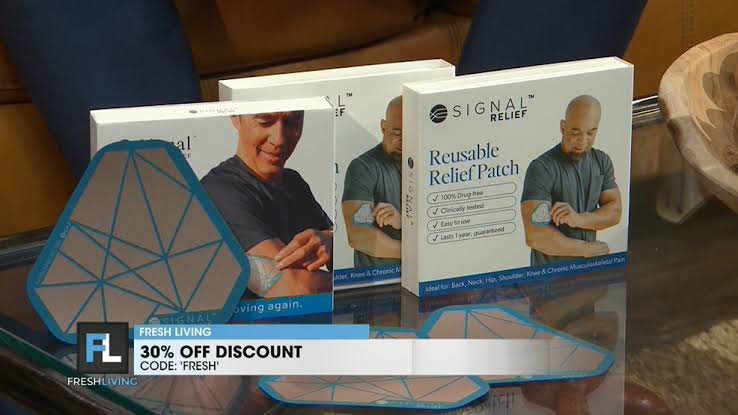
A single 4.5-inch patch runs around $144 after a discount from a list price near $180, and it is built to last a year or more, which the company frames as roughly 30 to 40 cents a day. Multi-packs bring the per-patch price down. Independent testing groups note the evidence in people is limited, and customer reviews are genuinely mixed: some report strong relief, others none, and a common gripe is the recurring cost of replacement adhesives. You can compare current options directly on the Signal Relief website.
For a skeptical, evidence-focused view of how the patch is supposed to work and what the research shows, ConsumerLab’s overview is a useful outside read. None of this reveals Mike Hammond’s take-home pay, but a product priced in the mid-hundreds, sold straight to customers at scale, points to a real revenue business rather than a hobby.
Frequently asked questions
What is Mike Hammond’s net worth?
There is no verified figure. He owns private companies, so his finances aren’t public. Any specific net worth number attached to his name is an unofficial estimate, not a confirmed amount from any official record.
Was Signal Relief on Shark Tank?
No. Signal Relief has never been on Shark Tank. The similarly named SignalVault, an RFID card protector by Chris Gilpin, appeared in 2015. They are separate companies with different founders and products.
What companies has Mike Hammond founded?
He co-founded Signal Relief and has built or led Caliber Smart, BioGuard Pest Control, BioShield Pest Control, MD Nursery & Landscaping, and Oak Haven Dental over roughly 20 years as an entrepreneur.
How much does the Signal Relief patch cost?
A single 4.5-inch patch is about $144 after a discount from a list price near $180. It is designed to last a year or more, and multi-packs lower the per-patch price.
Does the Signal Relief patch actually work?
Results vary. Many users report real relief, others feel little effect, and independent reviewers note the human evidence is limited. It is drug-free with a money-back guarantee, so it is low-risk to try.
Conclusion
There is no verified net worth for Mike Hammond of Signal Relief, and any exact figure online is invented. What is real is his record: a two-decade run of building and selling companies across pest control, satellite TV, landscaping, dental, and now drug-free pain relief.
Treat him as a proven private entrepreneur whose personal wealth simply isn’t public, ignore the made-up dollar amounts, and don’t confuse Signal Relief with the Shark Tank product SignalVault.
Recommended Articles:
Cerebral Success Shark Tank Net Worth: What the Company Is Worth Today
Copa Di Vino Net Worth: What the Brand Is Really Worth in 2026
Sphere Entertainment Co.’s Net Worth: What SPHR Is Really Worth in 2026
X-Craft Net Worth: What the Drone Company Is Actually Worth in 202