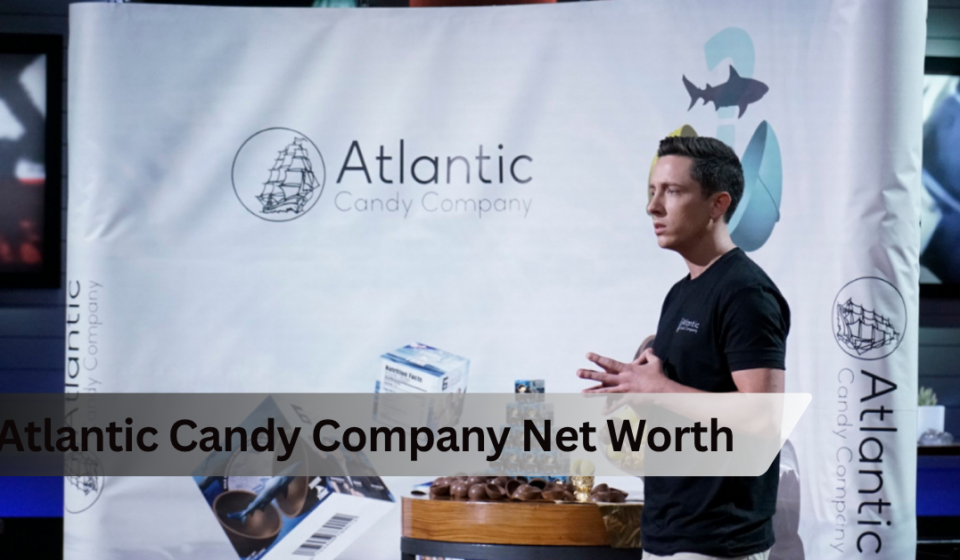

Atlantic Candy Company has never published a net worth, and it never will, because it’s a private, family-owned business with no legal duty to release financial statements. Based on everything that is publicly documented, including its own past valuation claim, its retail revenue, and a decade of court filings, a fair estimate today lands somewhere between $8 million and $15 million. That’s a wide range on purpose. The company’s fortunes have moved a lot since its 2016 Shark Tank pitch, through an expired patent, a long-running lawsuit, and even a change back to its original name. Here’s what is actually known, and how that estimate is built.
Who owns Atlantic Candy Company?
The Whetstone family owns it, and the name “Atlantic Candy Company” is really just one chapter in a longer corporate story. The business behind it is Whetstone Industries, a company controlled by Henry “Hank” Whetstone Jr. and his wife. In April 2015, Whetstone Industries changed its legal name to Atlantic Candy Company. A year later, in 2016, it changed back to Whetstone. That short window happens to cover the period when the business filed its early lawsuit and pitched on national television, which is why the Atlantic Candy Company name stuck in the public’s mind even though the underlying company has spent most of its life as Whetstone.
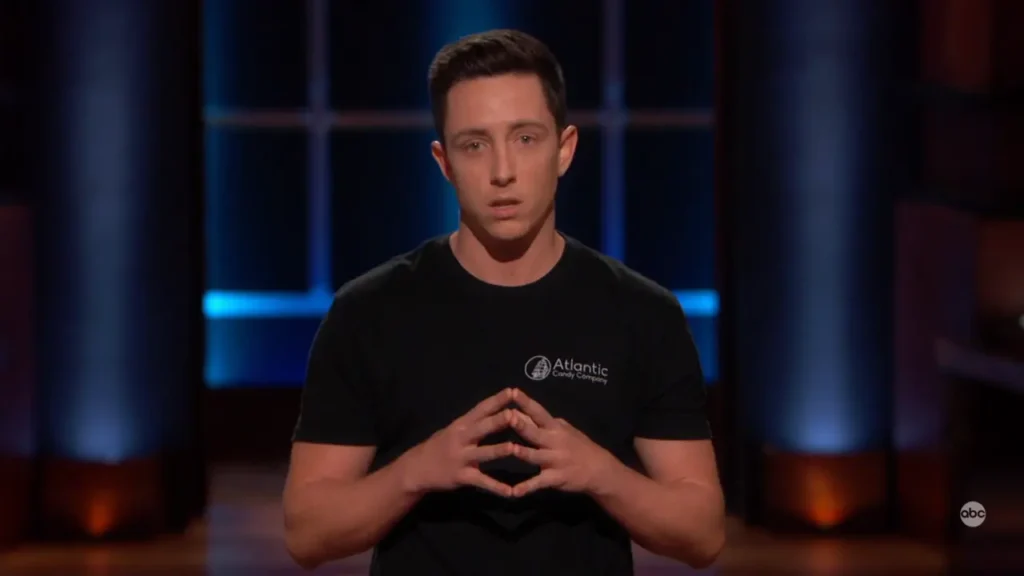
Henry Whetstone Jr. serves as CEO of the parent company and president of Whetstone Chocolate Factory, Inc. His son, Jared Whetstone, is the third-generation family member who fronted the ToyBox product and represented the business in its highest-profile public moment.
How did the company get its start?
It started small, literally out of a home kitchen. Henry and Esther Whetstone, both lifelong Florida residents, opened a little ice cream shop on St. George Street in downtown St. Augustine in 1966. They developed a homemade fudge recipe the same year, and by 1967 they were selling 13 flavors of fudge alongside hand-dipped chocolates made at night in their own kitchen.
Word of mouth pushed demand past what a kitchen could handle. The family opened a production factory on Cordova Street in the 1970s, then built a 10,000-square-foot factory on State Road 312 in 1984 once daughter Virginia Whetstone, fresh out of Vanderbilt, took over as president. Wholesale relationships with Nestlé, Hershey, and Mars grew alongside the retail side, and the business became known for oddities like melt-resistant chocolate bars made for the military during the Gulf War and Disney-themed hollow chocolate balls made for Nestlé in the 1990s.
In 2002, the Whetstone chocolate business merged with two other manufacturers to form SweetWorks Confections, a larger candy company based in Buffalo, New York. The family sold its stake in SweetWorks in 2004 and scaled back down, closing the national wholesale line and returning to a smaller footprint centered on St. Augustine, where the company still operates its original tasting tours and factory shop.
What happened when Atlantic Candy Company pitched Shark Tank?
Jared Whetstone appeared on Shark Tank season 8, episode 4, which aired October 14, 2016. He asked the panel for $1 million in exchange for a 10% stake in the business, which put a self-declared valuation of $10 million on the company at the time.
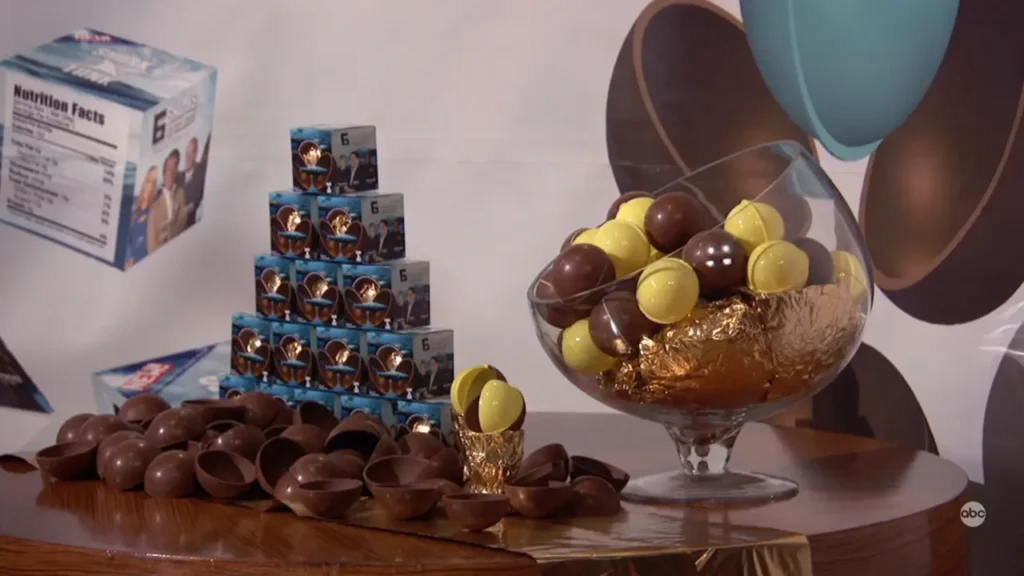
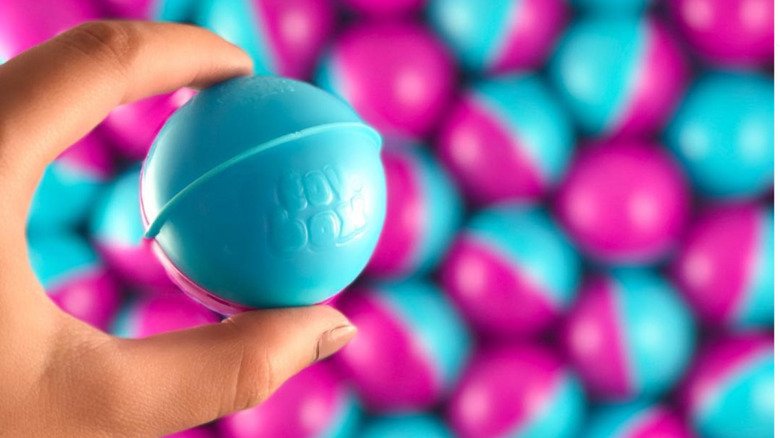
The pitch centered on ToyBox, a chocolate shell candy with a small toy sealed inside a plastic capsule, similar in concept to a Kinder Egg but built around a patented design meant to meet FDA safety rules that had banned that category of product in the United States since the 1930s. The sharks liked the taste and the idea, but several of them balked at the price once they learned the core patent protecting the design was set to expire in 2019. Without patent protection, they reasoned, any competitor could copy the toy-and-chocolate format once the clock ran out. No shark made an offer, and Jared Whetstone left without a deal.
How much money does Atlantic Candy Company make?
The company runs on two separate revenue streams. ToyBox, sold at retailers including Walmart, Target, Dollar General, and Office Depot, generates around $4 million a year on its own. That figure has stayed fairly consistent in public reporting for several years running, which suggests steady, mature retail demand rather than rapid growth.
The second and less visible stream is contract manufacturing. Atlantic Candy Company, through the Whetstone factory, produces chocolate for other brands under private-label and co-manufacturing agreements, including work tied to Hershey, Nestlé, and Disney over the years. This side of the business runs on thinner margins than a branded consumer product, but it adds volume and diversifies the company away from depending on a single product line. Between the two streams, total annual revenue most likely sits somewhere in the $5 million to $10 million range, though the company has not broken out an exact combined figure publicly.
What happened to the patent behind the ToyBox candy?
Henry Whetstone Jr. developed the technical process for a chocolate shell wrapped around a hard plastic capsule holding a small toy, and by 2000 he held two U.S. patents covering the design. For most of the early 2010s, those patents were the only legal way to manufacture an FDA-approved chocolate-and-toy combination product in the country, which gave the Whetstone companies real leverage as a licensor and contract manufacturer.
That leverage had a shelf life. The patents expired by 2019, exactly as the Sharks predicted during the 2016 pitch. Once they lapsed, any manufacturer could legally produce a similar toy-filled chocolate product without paying Whetstone a licensing fee. ToyBox kept selling anyway, since retail placement, brand recognition, and manufacturing relationships don’t disappear the moment a patent runs out, but the company’s value stopped resting on legal exclusivity and started resting on brand and distribution instead.
What happened in the Yowie lawsuit?
This is the part of the story that most coverage of Atlantic Candy Company gets out of date on, because it kept moving for years after the Shark Tank episode aired.
In 2012, Henry Whetstone signed a License Agreement and a separate Manufacturing Agreement with Yowie North America, an Australian company launching chocolate-and-toy products in the United States. Yowie paid Whetstone to use his patents and had Whetstone manufacture the products. The relationship strained almost immediately over missed equipment deliveries and financial terms, and the two sides renegotiated lower fees in 2014. Whetstone went on to produce more than 11 million Yowie units in 2014 and 2015.
Then, in late 2015, Yowie told Whetstone it had lined up a different manufacturer using a different, newly approved patent, and it stopped placing orders and stopped paying licensing fees. Whetstone sued for breach of contract in 2016, arguing Yowie owed him tens of millions of dollars under the terms of the deal. The case dragged through New York and Florida courts for years before reaching a bench trial. In 2023, the trial court sided mostly with Yowie, ruling that Yowie hadn’t breached the License Agreement and awarding Whetstone only $114,579.97 for two unpaid invoices under the separate Manufacturing Agreement.
Whetstone appealed, and in January 2025 Florida’s Fifth District Court of Appeal reversed part of that ruling. The appellate panel found that Yowie had, in fact, breached the License Agreement by walking away from its fee obligations before the agreement’s 2027 expiration date, and it sent the case back to the trial court to calculate additional damages owed to Whetstone. The dispute finally closed in early 2026 with a confidential settlement, resolved in Yowie’s favor with only a nominal payment, after which both sides agreed to dismiss the case with prejudice. After nearly a decade in court, the practical financial outcome for Atlantic Candy Company was modest, not the tens of millions once claimed in the original complaint.
So what is Atlantic Candy Company actually worth?
Put the pieces together and a reasonable estimate starts with revenue, since that’s the only hard number available. ToyBox brings in roughly $4 million a year as a branded, retail-distributed product with real shelf presence, which supports a higher valuation multiple, typically in the range of 1.5 to 2.5 times revenue for a small branded consumer goods line. That alone points to a branded-product value of $6 million to $10 million.
Contract manufacturing revenue, which likely adds another $1 million to $5 million a year, carries a lower multiple, often under 1 times revenue, because private-label manufacturing has thinner margins and less pricing power. That portion probably contributes another $1 million to $4 million in value.
Add those together, adjust down slightly for the company’s small size and its lack of patent protection since 2019, and a combined enterprise value of roughly $8 million to $15 million is the most defensible range available without access to audited books. The $10 million figure Jared Whetstone offered on Shark Tank in 2016 sits comfortably inside that range, and it’s worth remembering that number was a founder’s self-declared ask, not an independent appraisal. The 2026 Yowie settlement, resolved in Yowie’s favor for only a nominal sum, means the years-long litigation risk that once threatened to swing the company’s finances by tens of millions has now closed without materially changing that picture either way.
Frequently asked questions
Did Atlantic Candy Company get a deal on Shark Tank?
No. Jared Whetstone asked for $1 million for a 10% stake in 2016, but every shark passed, mainly because the product’s core patent was set to expire by 2019.
Is Atlantic Candy Company still in business?
Yes. Its ToyBox candy is still sold in major retailers, and the Whetstone family still runs contract chocolate manufacturing alongside its original St. Augustine chocolate shop and factory tours.
Who actually owns Atlantic Candy Company?
The Whetstone family. The company briefly used the name Atlantic Candy Company from 2015 to 2016 before reverting to Whetstone Industries, its longer-standing legal name.
What is the ToyBox candy from Atlantic Candy Company?
It’s a chocolate shell candy with a small toy sealed inside a plastic capsule, built around a patented safety design meant to meet FDA rules after older toy-filled candies were banned.
Did Atlantic Candy Company win its lawsuit against Yowie?
Partly. An appeals court ruled in its favor on the licensing claim in January 2025, but the case ended in a 2026 settlement that was favorable to Yowie, with only a nominal payment changing hands.
Conclusion
Atlantic Candy Company, legally Whetstone Industries, has no public net worth figure because it’s privately held. Based on its roughly $4 million ToyBox revenue, its contract manufacturing business, and the resolution of its long Yowie lawsuit in early 2026, the most defensible estimate today is $8 million to $15 million. The company keeps selling ToyBox in major retailers and keeps manufacturing for larger brands, built on distribution and reputation now that its founding patent has expired.
Related Post:
The Woobles Net Worth: What the Crochet Kit Company Is Really Worth
Bacardi Company Net Worth: What the Rum Giant Is Actually Worth
Hilton Family Net Worth: How Much the Hotel Dynasty Is Really Worth
Nana Hats Shark Tank Net Worth: Where the Banana-Hat Business Stands Now
Minus Cal Net Worth: What the Shark Tank Fat-Blocker Company Is Worth Now