
Balenciaga does not have a personal net worth, because it is not a person or a public company you can look up a single figure for. It is a luxury fashion brand owned by the French group Kering. The honest way to measure its size is by revenue and brand value, and on both counts the number sits at roughly €2 billion (about $2.2 billion). Below is where that figure comes from and what actually drives the money.
Does Balenciaga have a net worth?
No, not in the way the question is usually meant. Net worth means assets minus debts for a person or a company that reports its own accounts. Balenciaga is one brand inside a much larger listed group, so it does not publish a balance sheet of its own. There is no official Balenciaga net worth to quote.
What you can measure is how big the business is. Two numbers do that job well: how much Balenciaga sells in a year (revenue), and what the brand itself is judged to be worth (brand value). For Balenciaga, both land in the same range, which is why €2 billion is the figure worth remembering.
Quick answer: There is no single “Balenciaga net worth.” As a Kering-owned brand, its yearly revenue and brand value are each estimated at around €2 billion.
How much money does Balenciaga make?
Balenciaga’s yearly revenue is estimated at more than €2 billion. Kering does not break out an exact figure for the brand, but market sources and luxury analysts put it in that range.
Kering reports Balenciaga inside a group called “Other Houses,” which also holds Alexander McQueen, Brioni, Boucheron and a few smaller names. In 2024 that whole group brought in €3.2 billion, down 8% from the year before as luxury demand cooled. Balenciaga is the biggest single brand in that mix, which is how analysts arrive at the €2 billion estimate for the brand on its own.
To put that in scale, here is how Balenciaga compares with its sister brands under Kering.
| Kering brand | 2024 revenue | Trend |
|---|---|---|
| Gucci | €7.7 billion | Down 23% |
| Yves Saint Laurent | €2.9 billion | Down 9% |
| Bottega Veneta | €1.7 billion | Up 4% |
| Balenciaga (est.) | ~€2 billion | Part of a segment down 8% |
| “Other Houses” total | €3.2 billion | Down 8% |
So Balenciaga is a major brand, but a mid-sized one within Kering. Gucci alone earns close to four times as much and drives about half of the group’s sales. You can read the full breakdown in Kering’s 2024 annual results.
Who owns Balenciaga?
Balenciaga is owned by Kering, the French luxury group controlled by the Pinault family. Kering has held the brand since 2001 and today owns it in full.
Kering trades on the Euronext Paris stock exchange under the ticker KER. That means you cannot buy shares in Balenciaga by itself; buying Kering stock gives you a slice of the whole group. Kering’s other big houses include Gucci, Yves Saint Laurent and Bottega Veneta. Its main rival is LVMH, the group behind Louis Vuitton and Dior, which has no stake in Balenciaga.
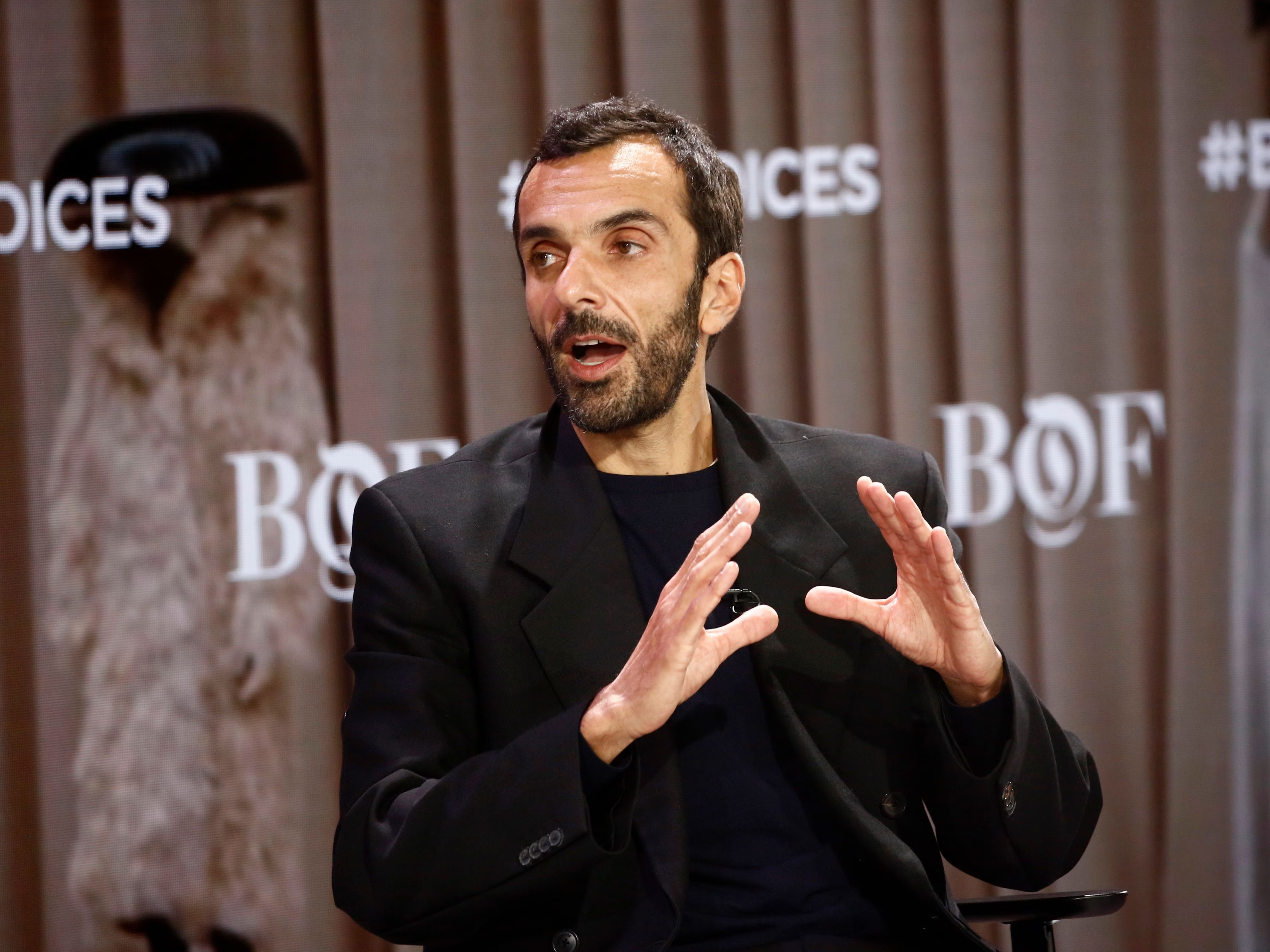
Day to day, the brand is run by CEO Gianfranco Gianangeli, who took the role in November 2024, alongside its creative director.
What is Balenciaga worth as a brand?
As a brand, Balenciaga is valued at around €2 billion by luxury analysts. When Kering moved designer Demna to Gucci in 2025, analysts sizing up the two brands pegged Balenciaga near €2 billion against Gucci’s near €8 billion.
Brand value here is an estimate, not a price tag. It reflects sales, profit, and how desirable the name is, rather than a figure Kering has published or a bid anyone has made. It moves with the luxury market, and 2024 and 2025 were softer years across the sector, so treat €2 billion as a well-grounded ballpark rather than an exact valuation.
How Balenciaga makes its money
Most of Balenciaga’s money comes from selling its own products through its own stores and website, plus a smaller slice from wholesale to other retailers. The brand ended 2024 with 271 stores worldwide, and its sales split fairly evenly between women’s and men’s.
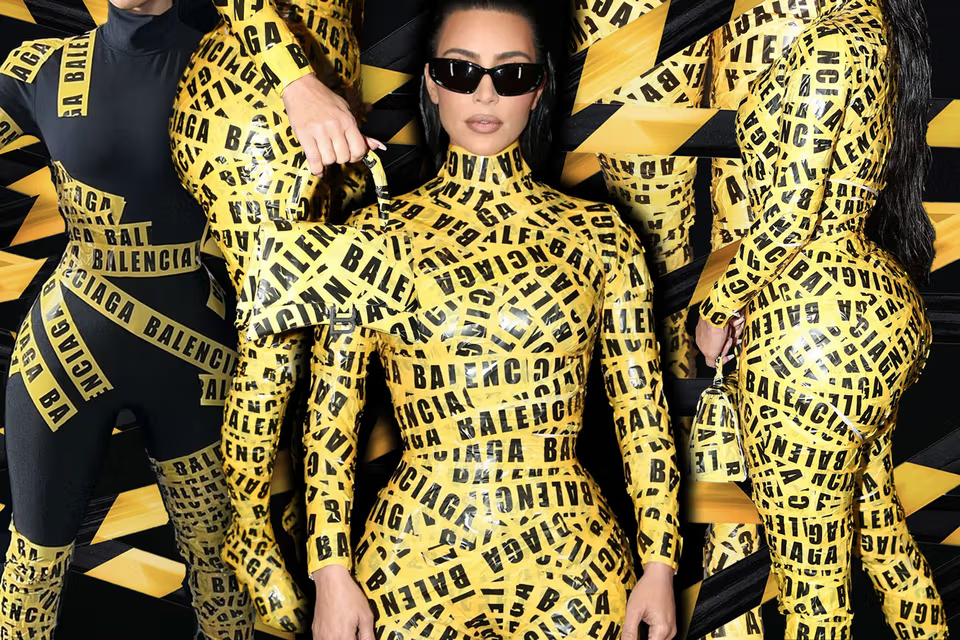
The biggest earners are leather goods and footwear. A few products carry a lot of weight:
- Handbags. The Le City bag, revived from the 2000s, and the newer Rodeo bag (fronted by Kim Kardashian in its campaign) are core sellers.
- Sneakers. The chunky Triple S and the sock-like Speed trainer helped define a whole era of “ugly” luxury footwear.
- Ready-to-wear. Oversized hoodies, drop-shoulder tailoring and statement coats keep the brand in the culture.
- Viral pieces. Items like the €1,750 “destroyed” sneakers and the €1,800 trash-bag pouch generated huge attention, which feeds sales across the rest of the range.
A new income stream is on the way too. Balenciaga fragrances are planned under Kering’s beauty arm, opening up perfume, one of the most profitable categories in luxury.
From a Spanish boutique to a Kering house
Balenciaga started as a single boutique and grew into a global brand over more than a century. Spanish designer Cristóbal Balenciaga opened his first shop in San Sebastián, Spain, in 1919, then moved the house to Paris in 1937 after the Spanish Civil War forced his Spanish stores to close.
In Paris he became one of the most respected couturiers of his time, known for sharp tailoring and bold new silhouettes. Christian Dior called him “the master of us all.” When Balenciaga retired in 1968, the house went quiet for years.
The name was revived in 1986 by the French fragrance company Jacques Bogart, which relaunched it with ready-to-wear. Then in July 2001, Gucci Group (part of what is now Kering) bought a controlling stake of about 91%, and the brand has been a Kering house ever since. The turnaround into the streetwear-driven powerhouse people know today came after 2015, when Demna took creative control.
| Year | Milestone |
|---|---|
| 1919 | Cristóbal Balenciaga opens his first boutique in Spain |
| 1937 | House moves to Paris |
| 1968 | Founder retires; the brand goes dormant |
| 1986 | Jacques Bogart revives the Balenciaga name |
| 2001 | Gucci Group (now Kering) buys a controlling stake |
| 2015 | Demna becomes creative director and reshapes the brand |
| 2025 | Demna leaves for Gucci; Pierpaolo Piccioli takes over |
What Demna’s exit means for the numbers
Demna’s move to Gucci in 2025 marks a turning point, but it does not change who owns Balenciaga or how the brand earns. The designer who spent a decade making Balenciaga a streetwear giant left in July 2025 to lead Gucci, another Kering brand. Italian designer Pierpaolo Piccioli, long the creative head at Valentino, took over as Balenciaga’s creative director the same month.
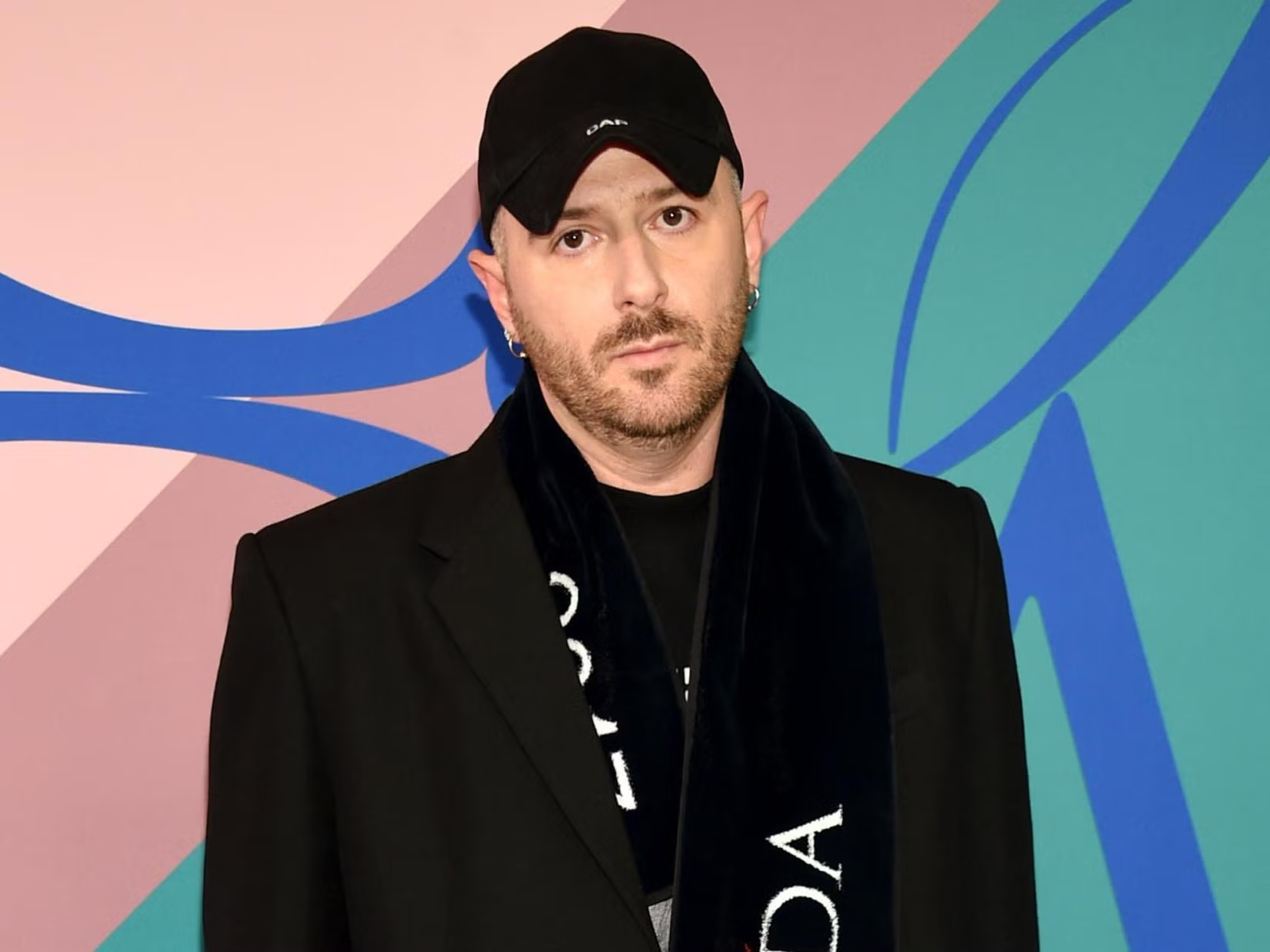
A change at the top can shift a brand’s momentum, and investors clearly cared: news of Demna’s switch briefly wiped billions off Kering’s market value on the day. For Balenciaga itself, the €2 billion range still holds. The near-term question is whether Piccioli’s more couture-leaning vision keeps the brand’s younger audience while the wider luxury market stays soft.
Frequently asked questions
What is Balenciaga’s net worth in 2026?
There is no official net worth, since Balenciaga is a brand rather than a person or standalone company. Its yearly revenue and brand value are each estimated at around €2 billion (about $2.2 billion).
Is Balenciaga owned by Gucci?
No. Gucci and Balenciaga are separate brands that share the same parent, Kering. Neither owns the other; both operate independently within the group.
Can I buy shares in Balenciaga?
Not directly. Balenciaga is not listed on its own. You can buy Kering shares on Euronext Paris (ticker KER), which gives you exposure to the whole group, including Gucci and Saint Laurent.
How much does Balenciaga make per year?
Market sources estimate more than €2 billion a year. Kering does not publish an exact figure, reporting Balenciaga within its “Other Houses” segment, which totaled €3.2 billion in 2024.
Who runs Balenciaga now?
Gianfranco Gianangeli has been CEO since November 2024. Pierpaolo Piccioli became creative director in July 2025, taking over from Demna, who left to lead Gucci.
Conclusion
Balenciaga has no personal net worth to look up, because it is a private brand owned by Kering, not a person or a standalone public company. The real measure of its size is its business: revenue and brand value each estimated at around €2 billion. Owned by Kering since 2001 and now led by Pierpaolo Piccioli, it remains a major but mid-sized house within a much larger group. When you see a single “net worth” number, read it as that €2 billion business, not a verified figure.
Related Post:
Dhanani Group Net Worth: How Rich Is the Family Behind Burger King and Popeyes?
What Is Mary Barra’s Net Worth? A Full Breakdown of Her Pay and GM Stock
Bob Barker Company Net Worth: What the Numbers Really Mean