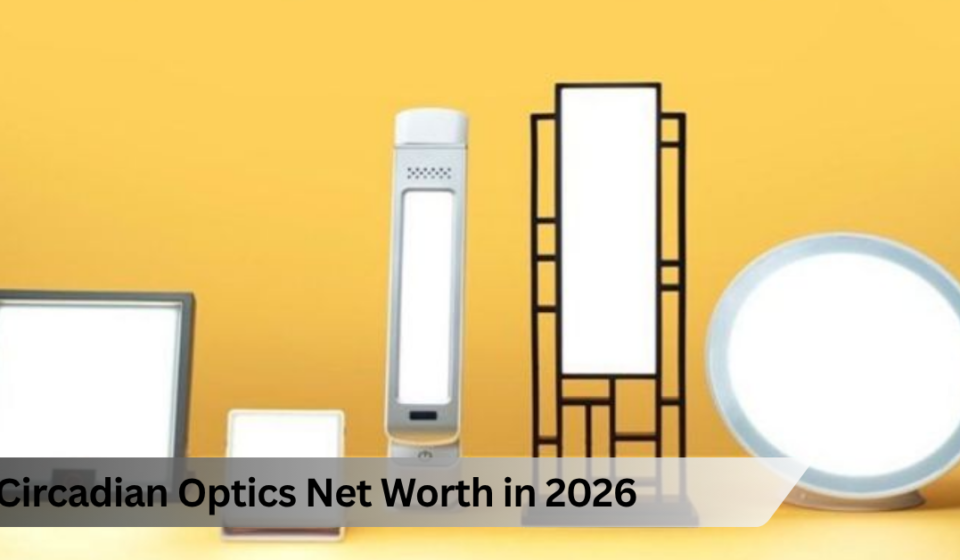

Circadian Optics does not have a public net worth. The company is privately held, so its value is never filed or published anywhere. The last hard numbers came from its Shark Tank pitch in 2019: $7.4 million in lifetime sales, $4 million in sales for 2018, a 70 percent gross margin, and a $7.5 million valuation that founder Amber Leong set herself.
Working from those figures and what has happened since, a fair estimate today is a brand worth roughly $4 million to $8 million. That is an estimate, not a filed figure, and the rest of this article shows you how it was built. It also answers the questions that usually come next: whether the Shark Tank deal closed, who owns the company now, and whether it is still selling lamps.
What is Circadian Optics worth in 2026?
The best estimate is $4 million to $8 million, and the honest answer behind it is that nobody outside the company knows the exact number. Circadian Optics has never been public, and when it changed hands in 2021 the price was not disclosed.

Two anchors make an estimate possible. The first is the set of numbers Leong gave on air in 2019. The second is the 2021 sale to Thrasio, a company that bought successful Amazon brands. In 2021, buyers like Thrasio typically paid three to five times a brand’s yearly seller earnings (profit before the owner’s pay and one-off costs). Leong projected $1.3 million in profit for 2019. Apply that multiple and the sale price lands somewhere between $4 million and $6.5 million.
The brand has kept selling since then, and in 2025 it relaunched with a higher-priced product line, which supports the top of that range. The bottom of the range covers the years when the company sold only through Amazon with almost no marketing. A “net worth” for a private company is really the price a buyer would pay for it, so that is the figure to keep in mind.
Key takeaway: Every Circadian Optics net worth figure you will find is an estimate. The only verified numbers are the 2019 pitch figures. Treat $4 million to $8 million as a reasoned range, not a fact.
What did the Shark Tank numbers show?
Amber Leong walked into the tank asking for $750,000 for 10 percent of the company, which values it at $7.5 million. The episode was Season 11, Episode 2, and it aired on ABC on October 6, 2019 to about 3.8 million viewers.
Her figures were strong for a three-year-old lamp business. She founded the company in 2016 in Minneapolis after a dark office winter left her exhausted, and all sales at the time came from online channels. Here is what she told the Sharks.
| Figure | What Leong reported in 2019 |
|---|---|
| Ask | $750,000 for 10 percent |
| Implied valuation | $7.5 million |
| Lifetime sales | $7.4 million |
| Sales in 2018 | $4 million |
| Average sale | $57.99 |
| Gross margin | 70 percent |
| 2019 projection | $5.6 million in sales, $1.3 million profit |
| Sales channel | Online only |
Her personal story carried the room as much as the numbers. She grew up in a small town in Malaysia in a home without indoor plumbing. Her parents cashed in their retirement savings to send her to Bemidji State University in Minnesota, and soon after arriving she nearly died from a serious illness. Kevin O’Leary was in tears by the end of the pitch.
Guest Shark Rohan Oza dropped out early. The other four split into two pairs and made matching offers. Kevin O’Leary and Barbara Corcoran offered $750,000 for 20 percent. Mark Cuban and Lori Greiner offered the same terms, then added $50,000 as a gift for Leong’s parents. She took the Cuban and Greiner deal. At 20 percent for $750,000, that handshake valued the company at $3.75 million, half of her ask.
Did the deal with Mark Cuban and Lori Greiner close?
No. The deal was never completed. Neither Cuban nor Greiner lists Circadian Optics among their Shark Tank companies, and there is no record that the $50,000 for Leong’s parents was ever paid.
The episode was filmed in June 2019. When it aired that October, Leong was still in talks with the Sharks’ teams and could not discuss terms. That gap is normal. Handshake deals on the show go through due diligence afterwards, and a large share of them fall apart or get renegotiated before any money moves.
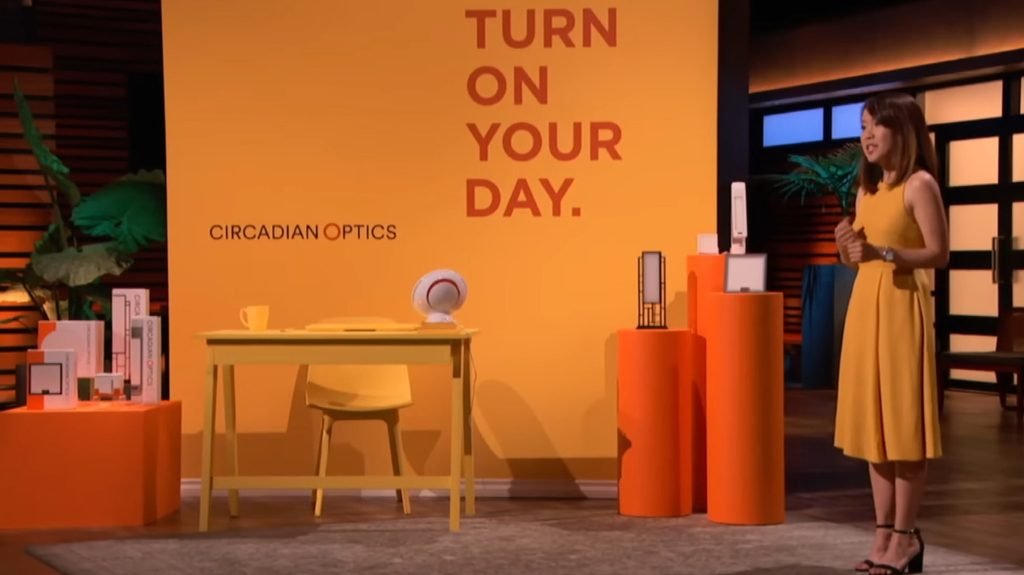
The exposure still paid off. A national TV audience of 3.8 million people saw a product that solves an everyday problem, and the lamps moved from online-only into big-box retail, including Target and Walmart. For a business selling a $58 item, that kind of reach matters more than the cheque itself.
What happened when Thrasio bought the company?
Circadian Optics was sold to Thrasio in 2021, and the price was never made public. Thrasio was the largest of the “Amazon aggregators,” companies that raised huge sums to buy up small brands selling on Amazon. At its peak it was buying about one brand a week and reached roughly 180 brands. Leong stayed on through December 2021, then left to co-found G-Works Venture Studio inside General Mills.
The years that followed were quiet for the brand. Its website was reduced to a redirect to Amazon by mid-2022, and its social media accounts went dormant. The lamps kept selling, but with little marketing behind them.
Then Thrasio itself ran into trouble. The company had raised about $3.4 billion and was once valued at $10 billion, but it overbought inventory and overpaid for brands during the pandemic boom. On February 28, 2024 it filed for Chapter 11 bankruptcy protection. The restructuring wiped out about $495 million of debt and brought in $90 million in new financing. Thrasio emerged from bankruptcy on June 18, 2024, as laid out in its official emergence announcement, and set out to cut its portfolio from about 180 brands to around 50.
Circadian Optics made the cut. That is a meaningful signal for its value: a restructured owner focused on profit chose to keep it rather than sell it off or wind it down.
Where does Circadian Optics stand today?
Circadian Optics is in business and growing again. In July 2025 Amber Leong returned to the company she founded, this time as Chief Marketing Officer, and announced the comeback on the brand’s Instagram account after four years of silence.
The full Circadian Optics website is back online, run from Minneapolis, with a four-year free replacement warranty and a customer base of more than 500,000 users since 2016. The lineup is now split into two collections. The Core collection is the original desk lamp range. The new Clinical collection is bigger, brighter, and priced well above anything the company sold in 2019.
| Collection | Lamps | Price range |
|---|---|---|
| Core | Luxy, Lumine, Lora, Lumos 2.0, Lattis, Lampu | $39.99 to $79.99 |
| Clinical | Langham, Langley | $149.99 to $199.99 |
That pricing tells you something about the company’s direction. The average sale in 2019 was $57.99. A Clinical lamp costs two to three times that, so each order can be worth far more than it was at the time of the pitch. Higher average order value with the same 70 percent style margins is exactly what pushes a small brand’s value up.
What is Amber Leong’s net worth?
Amber Leong has no public net worth either, and any dollar figure would be a guess. What is known is the shape of her career. She built Circadian Optics from 2016 to a $4 million-a-year business by 2018, then sold it to Thrasio in 2021 for an undisclosed amount. Selling a company with those sales and margins is very likely the biggest single payday of her career.

Since then she has co-founded G-Works Venture Studio at General Mills, launched Nocturne, a maker of solar-powered outdoor lamps with built-in speakers, and co-founded Bask Lamp, which sells cordless rechargeable lanterns. In 2025 she returned to Circadian Optics as CMO. She was also the first Malaysian entrepreneur to appear on Shark Tank.
Frequently asked questions
Is Circadian Optics still in business in 2026?
Yes. The company sells through its own website, Amazon, and retail stores, and it relaunched in 2025 with a new Clinical lamp collection. Founder Amber Leong rejoined as Chief Marketing Officer in July 2025.
Who owns Circadian Optics now?
Thrasio, an Amazon brand aggregator, bought the company in 2021 for an undisclosed price. Thrasio went through Chapter 11 in 2024, emerged in June that year, and kept Circadian Optics as one of its remaining brands.
What was the Circadian Optics deal on Shark Tank?
Mark Cuban and Lori Greiner offered $750,000 for 20 percent plus a $50,000 gift for Leong’s parents, valuing the company at $3.75 million. Kevin O’Leary and Barbara Corcoran made a matching offer without the gift. The Cuban and Greiner deal was accepted on air but never closed.
How much money did Circadian Optics make before Shark Tank?
The company had $7.4 million in lifetime sales by mid-2019, with $4 million of that in 2018. Its average sale was $57.99 with a 70 percent gross margin, and it projected $5.6 million in sales and $1.3 million in profit for 2019.
How much do Circadian Optics lamps cost?
Core collection lamps run from $39.99 for the Luxy to $79.99 for the Lampu. The Clinical collection starts at $149.99 for the Langham and goes to $199.99 for the Langley. All lamps come with a four-year replacement warranty.
Conclusion
Circadian Optics is a private company, so its net worth is an estimate rather than a published figure. The verified numbers are from 2019: $4 million in yearly sales, 70 percent margins, and a $7.5 million ask that the Sharks cut to $3.75 million in a deal that never closed. Add the 2021 sale to Thrasio, survival through Thrasio’s 2024 restructuring, and the founder’s 2025 return with a premium lamp line, and a range of $4 million to $8 million is the fair answer.
Related Post:
K9 Mask Shark Tank Net Worth: The Real Numbers Behind the Dog Mask Brand
Stacey Bendet Net Worth: What the Public Record Actually Shows
MTailor Shark Tank Net Worth: What the Company Is Worth in 2026
Richard McDonald Net Worth: What the Co-Founder of McDonald’s Was Really Worth
Mewbourne Oil Company Net Worth: What the Private Permian Producer Is Actually Worth