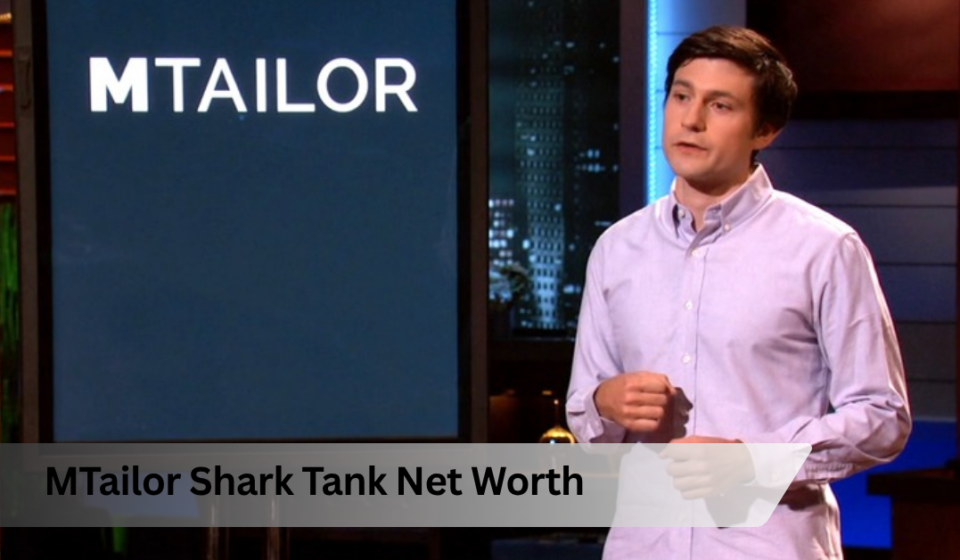

MTailor’s net worth is about $25 million in 2026. That matches the valuation founder Miles Penn asked for on Shark Tank Season 7, when he wanted $2.5 million for 10 percent of the company and walked out with nothing. Ten years later, the custom clothing app sells roughly $13 million a year, has raised over $15 million from investors since the show, and is still running. Here is where that number comes from, what happened in one of the tensest pitches the show has aired, and how the company got here without a Shark.
What is MTailor’s net worth in 2026?
The most defensible figure for MTailor’s net worth is around $25 million. MTailor is a private company, so there is no public share price to check. A net worth figure for a business like this rests on three things: what investors last valued it at, what it earns, and what it has raised.

On all three, the picture points to the mid twenties. The company reached about $13 million in yearly sales by April 2024, and direct-to-consumer clothing brands at that size typically get valued at one to two times revenue. It has raised about $17.5 million in total funding, including $7.2 million in 2018 and another $8.3 million in early 2022, and investors do not keep writing checks to a company worth less than they put in. And $25 million is exactly the valuation Penn defended on the show in 2016.
Key takeaway: MTailor is worth about what Miles Penn said it was worth on Shark Tank. He never got the Sharks to believe the number, but the business grew into it.
Treat any figure for a private company as an estimate, not an audited fact. The honest range runs from the high teens to somewhere above $25 million depending on how you value $13 million in custom clothing revenue. What is not in doubt is that the company survived, grew its sales roughly tenfold since the pitch, and did it without a single Shark dollar.
What happened when MTailor appeared on Shark Tank?
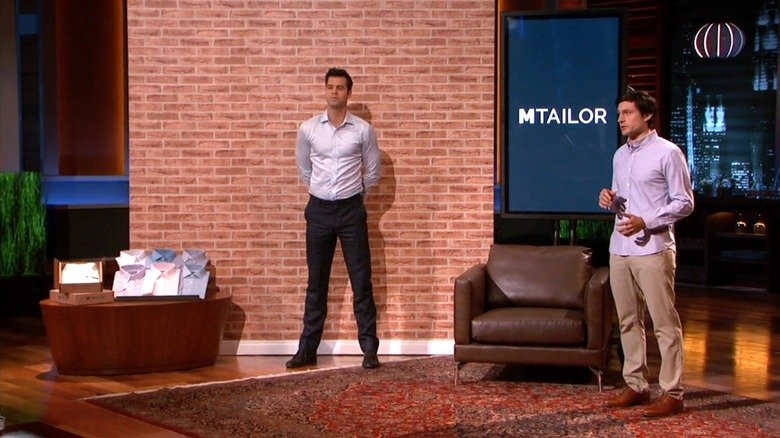
Miles Penn pitched MTailor in Season 7, Episode 17, which aired in February 2016. He asked for $2.5 million for 10 percent equity and demonstrated the app live: pick a shirt style from more than 10,000 combinations, lean your phone against a wall, do a slow spin, and the camera takes your measurements. He told the Sharks the system was 20 percent more accurate than a human tailor.
The numbers behind the pitch were shakier than the demo. Here is what came out under questioning:
| Detail | What happened on the show |
| Season and episode | Season 7, Episode 17, aired in February 2016 |
| The ask | $2.5 million for 10 percent equity, a $25 million valuation |
| Monthly revenue | $150,000, which had dipped to $130,000 during supply problems |
| Yearly sales pace | On track for $1.1 million against a $2 million goal |
| Cash in the bank | $1.4 million |
| Return rate | 15 percent |
| Result | Offers came in, Penn turned them all down and left with no deal |
The tone soured early. Penn opened with a jab at off-the-rack menswear that landed badly with Daymond John, who built FUBU, and things never recovered. Daymond pressed him on the $25 million valuation, pointing out that MTailor had raised money at a $10 million valuation not long before. Kevin O’Leary hammered the 50 percent miss on projected sales and later called Penn a “dead shirt walking.” Guest Shark Chris Sacca, a Silicon Valley investor who might have been the natural fit, dug into the revenue dip instead.
Offers did come, but at valuations far below what Penn wanted. He turned them all down and left the Tank with no deal, no partner, and a reputation as one of the show’s most combative founders.
Why did Miles Penn walk away without a deal?
Penn walked because the math on his side was different from the math on theirs. He had already raised about $2 million from Khosla Ventures and gone through Y Combinator, the startup program behind Airbnb and Dropbox. With $1.4 million in the bank, he was not desperate for cash. Taking a Shark offer at a slashed valuation would have meant giving up a big slice of the company for money he could raise elsewhere on better terms.
That is exactly how it played out. Venture investors kept backing MTailor after the episode, at terms the Sharks refused to touch. Whatever you think of how the pitch went, the decision to walk was a calculated one, not a tantrum. The company kept 100 percent of the equity the Sharks wanted and still got its funding.
How does MTailor actually work?
MTailor makes custom clothing measured by your phone camera. You download the app, prop the phone against a wall, and turn in a slow circle for about 15 seconds. Machine learning software takes 16 body measurements from the video and builds a personal pattern, no tape measure and no visit to a tailor. Everything the company sells is cut to that pattern.
The catalog started with men’s dress shirts and now covers tees, polos, suits, blazers, dress pants, jeans, chinos, and shorts, plus custom jeans for women. The clothes are designed in San Francisco and sewn in Bangladesh, and prices sit near regular retail rather than bespoke levels. If the fit is off, the company remakes the garment free within 90 days. You can see the full range and the measurement process on MTailor’s official site.
The pitch to customers is simple: standard sizes are a compromise, and a shirt built from your own 16 measurements is not. More than 100,000 people have ordered through the app, and it holds a 4.6-star rating on Google Play.
How MTailor grew after Shark Tank
The episode gave MTailor a national audience, and the company converted that attention into a decade of steady, unglamorous growth. The milestones tell the story:
- 2012: Miles Penn and Rafi Witten, two Stanford computer science grads, found the company and go through Y Combinator.
- 2016: The Shark Tank episode airs in February. No deal, but sales climb on the exposure.
- 2018: MTailor raises $7.2 million in venture capital, with $5.2 million of it from Khosla Ventures, and reports a valuation of about $15 million that year.
- 2019: Co-founder Rafi Witten leaves the company. Penn stays on as CEO.
- 2022: Another $8.3 million round closes in January, bringing total funding to about $17.5 million.
- 2024: Yearly sales reach about $13 million as of April, roughly ten times the pace at the time of the pitch.

Growth came from widening the catalog rather than chasing hype. A customer who bought one shirt could come back for a suit, jeans, and chinos cut to the same measurements, which raised how much each customer spends over time without raising the cost of winning them. The company also kept its 90-day remake guarantee, which does for fit anxiety online what a fitting room does in a store.
It has not all been polish. The brand’s social media accounts have sat mostly quiet since 2021, and the company runs lean instead of loud. But quiet and profitable beats noisy and gone, and plenty of Shark Tank alumni with deals have folded in the same stretch.
What is Miles Penn’s net worth?
There is no reliable public figure for Miles Penn’s personal net worth, and any exact dollar amount attached to his name is a guess. What can be said with confidence is how his wealth is structured. As founder and CEO he holds a significant equity stake in a company worth about $25 million, though roughly $17.5 million in outside funding means investors own a meaningful share too.
Founder stakes after several funding rounds commonly land between 20 and 40 percent, which would put the paper value of his holding in the single-digit millions. Paper is the key word: that money only becomes real if MTailor is sold or goes public. Until then, Penn’s net worth rises and falls with the company he refused to hand the Sharks.
Is MTailor still in business in 2026?
Yes. MTailor is active in 2026, selling through its website and its iOS and Android apps, with headquarters in San Francisco and production in Bangladesh. Orders, remakes, and the free-return policy all still run, and the company’s FAQ page is kept current with its product list and measurement details.

That alone puts it in rare company. Most businesses that leave the Tank without a deal fade within a few years. MTailor turned down every offer, kept its equity, and outlasted a large share of the companies that shook hands on air. For a founder Kevin O’Leary wrote off on national television, still shipping custom suits a decade later is a decent last word.
Frequently asked questions
What is MTailor worth today?
About $25 million as of 2026. The company is private, so the figure is an estimate built from its roughly $13 million in yearly sales, about $17.5 million in total funding, and the valuation history since its Shark Tank pitch.
Did MTailor get a deal on Shark Tank?
No. Miles Penn asked for $2.5 million for 10 percent in Season 7 and received offers only at much lower valuations. He rejected all of them and left without a deal, then raised venture capital on his own instead.
Who owns MTailor?
Founder Miles Penn remains CEO and a major shareholder. Venture investors, including Khosla Ventures, own the rest through funding rounds totaling about $17.5 million. Co-founder Rafi Witten left the company in 2019.
Is MTailor still in business in 2026?
Yes. It sells custom shirts, suits, pants, jeans, and more through its website and mobile apps, with a 90-day free remake guarantee. The clothes are designed in San Francisco and made in Bangladesh.
How accurate is the MTailor measuring app?
The app takes 16 measurements from a 15-second phone video, and the company puts its accuracy at 20 percent better than a human tailor. Over 100,000 customers have ordered through it, and it holds a 4.6-star rating on Google Play.
Conclusion
MTailor’s net worth stands at about $25 million in 2026, the same valuation the Sharks laughed off in 2016. Miles Penn left without a deal, raised about $17.5 million on his own terms, grew sales to around $13 million a year, and kept the equity. If you searched this after seeing the episode, the short version is this: the tensest pitch of Season 7 turned into one of its quieter success stories.
Related Post:
Mewbourne Oil Company Net Worth: What the Private Permian Producer Is Actually Worth
SoaPen Net Worth: What the Shark Tank Soap Pen Company Is Worth
Roominate’s Shark Tank Net Worth: What the Company Was Really Worth
Anthony Pompliano’s Net Worth: What the Public Filings Actually Show
Chefee Shark Tank Net Worth: What the Robot Kitchen Company Is Really Worth