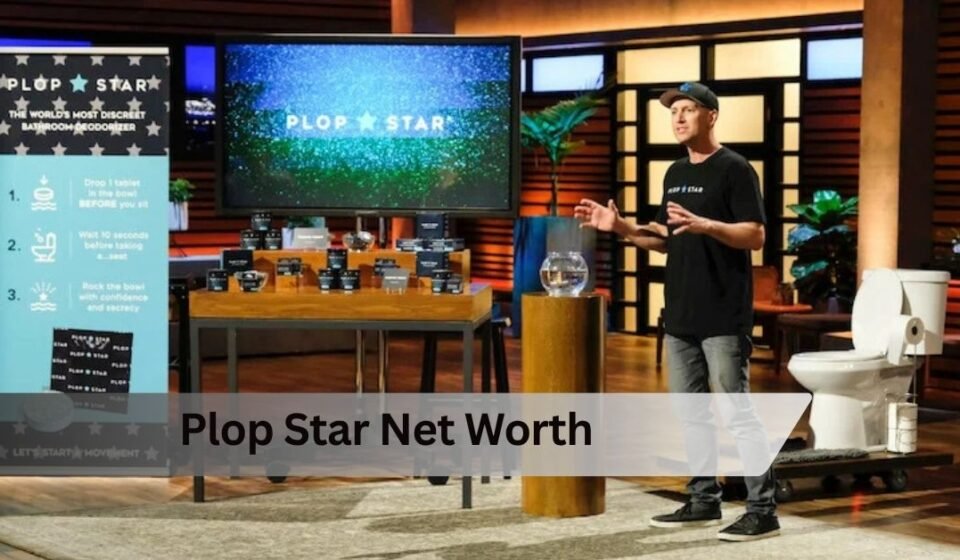

Plop Star is a bathroom deodorizer brand, not a person, so its net worth is really the value of a small business. That value has never been made public. The one number you can trust is sales: the company has grown from about $12,000 in lifetime sales at its Shark Tank pitch to roughly $1.3 million since. Everything past that, including the tidy million-dollar valuations you see attached to the name, is an estimate.
So the short version is this. No shark ever invested. The brand slowed down for a while, then came back. It still sells today, mostly online. Below is the full story, the money that can be verified, and why a single clean net worth figure does not exist for a company like this.
Is Plop Star a person or a company?
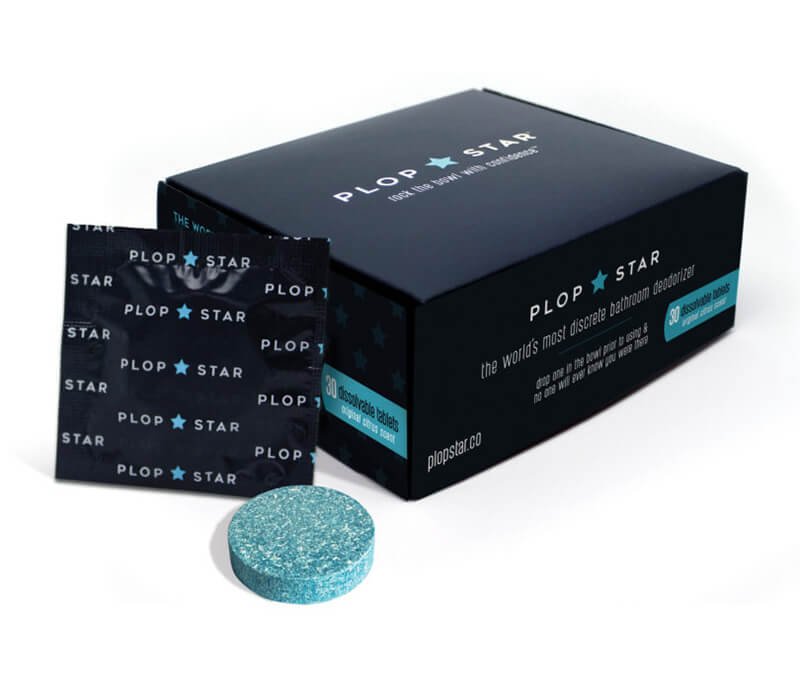
Plop Star is a company. The name gets searched as if it belongs to a celebrity, but it is a product brand built around one item: a small tablet you drop into the toilet before you sit down. The tablet dissolves and spreads a layer of essential oils across the surface of the water, which traps odor underneath and leaves a light citrus smell behind.
The person behind the brand is Tyler Jay, a director from the Chicago area. He owns the company, so when people ask about “Plop Star net worth,” they are usually asking one of two things: what the business is worth, or what Tyler Jay himself is worth. Those are different questions, and neither has an official answer, but both can be talked about sensibly.
Quick answer: Plop Star is a toilet deodorizer brand founded by Tyler Jay. The business is privately held, so any net worth number is an estimate, not a reported figure.
What is Plop Star actually worth?
There is no verified net worth for Plop Star, because it is a private company that has never published its finances. That is the honest headline. What can be stated with confidence is the sales trajectory, and that tells you far more than a made-up valuation would.
At the time of the Shark Tank taping in 2019, Plop Star had done about $12,000 in total sales across its whole life as a business. That is a tiny number, and it is the main reason the deal fell apart on the show. Since then, helped by the exposure and steady online selling, lifetime sales have climbed to somewhere around $1.3 million.
Here is the trap with the bigger figures. When Tyler asked for $150,000 in exchange for 10% of the company, he was implying the whole business was worth $1.5 million. That was a pitch number, a hope, not a price anyone paid. No investment happened, so nothing confirmed that value. Turning “the founder once asked for a valuation of $1.5 million” into “the company is worth $2 million today” is guesswork stacked on guesswork.
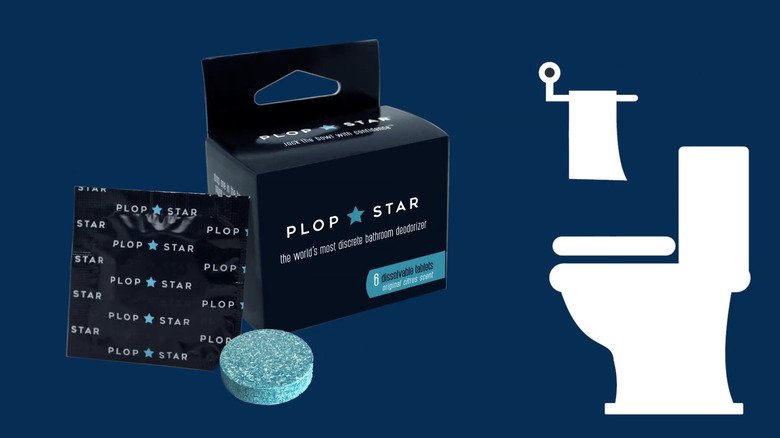
A fairer way to think about it: Plop Star is a lean, one-owner brand with a single core product, a second product, and a loyal but modest customer base. Lifetime sales near $1.3 million spread over several years point to a small, steady business, not a runaway hit. If you want one takeaway on money, use the sales figure and treat every dollar “net worth” number as a rough guess.
It also helps to know what “net worth” even means for a business like this. For a private brand, it is not cash in a bank account. It is what the whole thing would sell for: the recipe and any patents, the brand name, the customer list, the Amazon reviews, and whatever inventory and equipment exist, minus any debts. Nobody has put Plop Star up for sale, so nobody has priced those parts. That is why you will never find a Forbes entry or a filing with a real number, only blog estimates that copy and inflate each other.
One more thing separates the founder’s wealth from the brand’s. Tyler Jay earns most of his living from his production company, not from Plop Star. So even a generous guess at the brand’s value would not equal his personal net worth, and the sales the tablets bring in are a side stream rather than his main income. When a headline blends the two into one big figure, it is mixing two things that should stay apart.
Plop Star by the numbers
This table lays out what was actually said on the show against what changed afterward, so you can see which numbers are solid and which are not.
| What was pitched | Detail | What changed after |
|---|---|---|
| Founder | Tyler Jay, a Chicago film and commercial director | Still, the owner and CEO |
| The ask | $150,000 for 10% equity | No shark invested |
| Implied valuation | $1.5 million | A pitch figure, not a sale price |
| Lifetime sales at taping | About $12,000 | Grew to roughly $1.3 million |
| Products | Toilet deodorizer tablets | Added a toilet spray in 2021 |
| Main rival named | Poo-Pourri | Still the bigger brand in the category |
What happened on Shark Tank
Plop Star appeared on Shark Tank Season 11, Episode 4, which aired in October 2019. Tyler Jay made an entrance nobody forgot: he rode into the room on a motorized toilet. It got a laugh, which was the point, and then he made his pitch for $150,000 in return for 10% of the company.
His argument was simple. Regular bathroom sprays only mask smells; they can leak in a bag, and they leave a film. His tablet stops the odor before it starts. He named Poo-Pourri, the established brand in this space, as his main rival and said he was ready to compete with it.
The sharks liked the humor but not the business. Two things sank it. The valuation looked high for a company with only $12,000 in lifetime sales, and there was no clear plan to grow beyond selling online. Mark Cuban went out first. Barbara Corcoran doubted the demand. Lori Greiner, who had famously backed Squatty Potty, felt the market was too crowded. Kevin O’Leary took issue with the price and the sales. Guest shark Rohan Oza genuinely liked the product but did not see a route to market. All five passed, and Tyler left without a deal.
The deal died on two points: a valuation that outran the sales, and no plan to scale past Amazon. The product itself was never really the problem.
How the tablet works, and why it is different
Most bathroom products fight odor after it is already in the air. A spray puts scent on top of the smell, so for a moment, you get both at once. Plop Star flips the order. You treat the water before you go, so the smell is caught the instant it forms and never really escapes into the room.
The trick is on the surface of the water. As the tablet dissolves, it releases essential oils that spread into a thin film across the top of the bowl. Odor from what lands below has to pass through that film to reach the air, and the oils hold most of it under the water line. What you are left smelling is a light citrus scent instead of the real thing. It is closer to how a bath bomb scents bathwater than how an air freshener works, which is exactly where the idea came from.
The practical wins are simple. There is no bottle to leak in a bag. There is no film left on the seat or the floor. And because each tablet is wrapped on its own, you can carry a couple without anyone knowing. That portability is the real product here. Anyone can buy a spray for their own bathroom; the reason to carry a tablet is the bathroom that is not yours.
Who is Tyler Jay?
Tyler Jay is a commercial director and the founder of Tandem Inc., a production company he started in Chicago in 2014. Before that, he studied media arts at the University of Arizona and worked at big advertising agencies. His day job is making branded video content, and that background shaped Plop Star more than any business degree would have.
The idea came from home. While drawing a bath for his daughter, he watched a bath bomb fizz and scent the water, and it clicked that the same chemistry could work in a toilet bowl. He had worked on toilet odor products before through his agency days and was sure the sprays and drops on the market could be beaten by something cleaner.

Turning that hunch into a real product was slow. Tyler spent about three and a half years on research, working with a chemical company that formulates household goods, and went through dozens of versions before the tablet dissolved at the right speed, held the right amount of oil, and gave off a scent that was pleasant without being heavy. That long development is part of why the sales at pitch time were so small: he had spent years perfecting the product before pushing to sell it, which the sharks read as caution rather than progress.
His production skills showed up in the marketing. Rather than pay for polished ads, he wrote and starred in his own comic commercials, riding a toilet and pitching the product with a straight face. For a brand built on an awkward subject, that self-made humor did a lot of the selling. Tyler still runs Tandem today, and Plop Star has always been more of a side venture than his main line of work.
What Plop Star sells and for how much
The core product is still the tablet. You drop one into the bowl, wait about ten seconds, and the essential oils form a barrier on the water. The tablets come individually wrapped so they fit in a pocket, wallet, or purse, which is the whole pitch: discreet odor control you can carry into any public bathroom.
The lineup is small, and the prices are modest:
- A 30-pack of tablets, priced around $13 to $15
- A toilet deodorizing spray, added in 2021, is priced around $9.99
- Smaller multipacks that have come and gone over the years
Most sales run through Amazon and the brand’s own site at plopstar.com. On Amazon, the tablets hold a solid rating, with buyers praising how well they work, while reviews on the spray are more mixed. The pricing sits a notch below a full-size Poo-Pourri bottle, which is the position a smaller challenger usually wants.
How it stacks up against Poo-Pourri
Every conversation about Plop Star runs into the same rival: Poo-Pourri. That brand got there first, spends heavily on marketing, and sits on store shelves across the country. It is the reason the sharks worried about market share, and it is the giant Plop Star that was always going to be measured against.
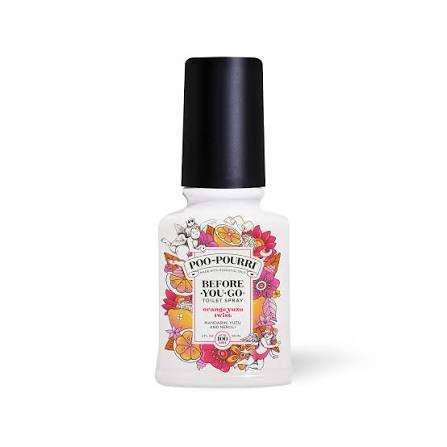
The products take different routes to the same goal. Poo-Pourri is a spray you spritz onto the water before you go, sold in bottles of various sizes. Plop Star is a solid tablet you drop in. The tablet’s edge is portability and no risk of leaks; the spray’s edge is a wider range of scents, easy availability in shops, and a name people already know. For a lot of buyers the choice comes down to whether they want something to keep at home or something to carry.
Price is where Plop Star tries to compete. Its tablets and spray sit a little below a full-size Poo-Pourri bottle, which is the usual playbook for a smaller challenger. But price alone rarely beats scale and shelf space, and that mismatch is a big part of why Plop Star stayed a niche brand instead of taking real share. It found a corner of the market rather than the middle of it.
Is Plop Star still in business?
Yes. Plop Star is still selling today, though the road was bumpy. Right after the episode aired, the brand got the usual Shark Tank bump and sold out fast. Then it went quiet. From roughly 2019 to 2021, the social media pages went dark, and the store showed items as sold out or unavailable for a long stretch. It looked, from the outside, like the company had folded.
It had not. In 2021 the brand came back, restocked the tablets, added the toilet spray, and updated the packaging to a smaller, easier tablet. Since then it has kept supplying products, mainly through Amazon, without much noise on social media. The company has also signalled interest in wholesale and business-to-business orders, which fits a founder who would rather sell steadily than chase viral attention.
The gap in 2020 and 2021 lines up with the pandemic, when public restrooms, the exact place this product is built for, were far less busy. Whatever the cause, the pattern now is a small brand ticking along rather than scaling up. For a search that is really asking “did this thing survive,” the answer is a clear yes, just quietly.
Frequently asked questions
What is Plop Star’s net worth?
There is no official figure. Plop Star is a private company, so any net worth number is an estimate. What is verified is lifetime sales, which have grown to roughly $1.3 million since its Shark Tank appearance.
Did Plop Star get a deal on Shark Tank?
No. Tyler Jay asked for $150,000 for 10% of the company, but all five sharks passed. They liked the product but felt the valuation was too high for only $12,000 in sales and saw no clear plan to grow.
Is Plop Star still in business in 2026?
Yes. After going quiet around 2020 and 2021, the brand returned with restocked tablets, a new toilet spray, and updated packaging. It still sells today, mainly through Amazon and its own website.
Who owns Plop Star?
Tyler Jay, a Chicago-based commercial director, founded and still owns Plop Star. He also runs a video production company called Tandem Inc., which he started in 2014. Plop Star is his side venture.
How much do Plop Star tablets cost?
A 30-pack of tablets runs about $13 to $15, and the toilet spray is around $9.99. Both are sold on Amazon and at plopstar.com, priced a little below a full-size bottle of the bigger rival brand.
Conclusion
Plop Star is a bathroom deodorizer brand, not a person, and it has no public net worth, so treat any exact dollar figure as a guess. The number worth remembering is sales, which grew from about $12,000 at the Shark Tank pitch to roughly $1.3 million since. No shark invested, the brand paused around 2020, then returned with a spray and new packaging. Today it still sells, mostly on Amazon, as a small and steady one-owner business rather than a breakout success.
Recommended Articles:
Mike Hammond Signal Relief Net Worth: What Is Actually Known
Cerebral Success Shark Tank Net Worth: What the Company Is Worth Today
Copa Di Vino Net Worth: What the Brand Is Really Worth in 2026
Sphere Entertainment Co.’s Net Worth: What SPHR Is Really Worth in 2026
Boot Illusion Shark Tank Net Worth: Where the Company Stands Today