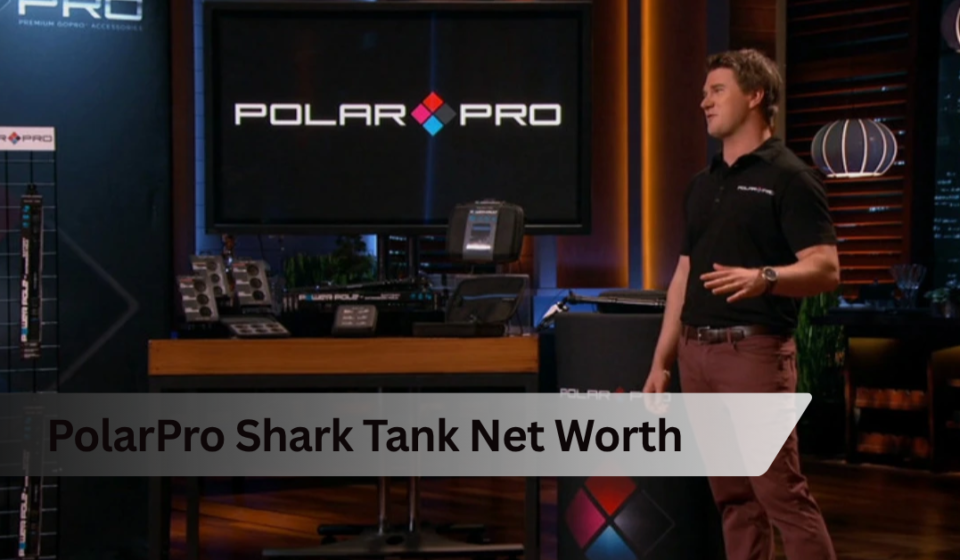

PolarPro has no published net worth. The company is privately held, files nothing public, and has never announced a valuation of its own, so a precise figure does not exist. What is on the record: the sharks priced PolarPro at $5 million when Jeff Overall pitched in November 2015, the business was tracking about $5.6 million in sales that year, and it still designs and sells camera gear from Costa Mesa, California. A realistic value today sits somewhere between $5 million and $15 million.
What is PolarPro worth today?
Somewhere in the $5 million to $15 million range. That is a range rather than a single number because the company keeps its books to itself, and nothing forces a private US business of this size to share them.
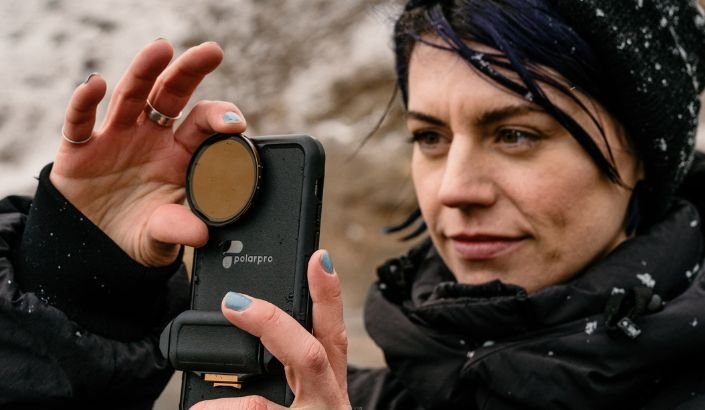
The range comes from simple math. Brands like this one, physical products with a loyal following and a strong store of their own, often sell for one to three times their yearly revenue. PolarPro’s last confirmed sales figure is the roughly $5.6 million it was on pace for in 2015. Since then the product line has moved sharply upmarket, from cheap GoPro filters to $329.99 magnetic filter kits and matte box systems built for professional film crews. Higher prices on a bigger customer base point to revenue holding steady or climbing.
Two things pull the number down. The company runs lean, with a team of roughly 20 people, and it spends heavily on tooling and design instead of banking profit. Two things push it up. It owns its brand outright, and it sells much of its gear straight from its own site at full margin.
The $5 million valuation from the show is a real, checkable number. Anything more precise than a range for today is a guess, including this one.
Net worth, revenue and valuation are not the same thing
For a company, net worth usually means what the whole business would fetch if somebody bought it, or what is left once debts come off its assets. It is not the cash in the bank, and it is not annual sales.
That gap explains PolarPro’s price on the show. A $5.6 million sales pace came with only about $300,000 of expected profit, so the sharks valued the company at roughly one times sales instead of some flattering multiple. Revenue tells you how much money passes through a business. Profit and brand strength tell you what it is worth. The founder’s own net worth is a third number again, because it depends on how much of the company he holds and what else he owns.
The valuation PolarPro walked out with
$5 million, and it never moved.
Overall asked for $500,000 in exchange for 10% of the company. That prices the whole business at $5 million. After a bidding war he took $1 million from Mark Cuban and Robert Herjavec for 20%. Double the cash, double the equity, exactly the same price per share.
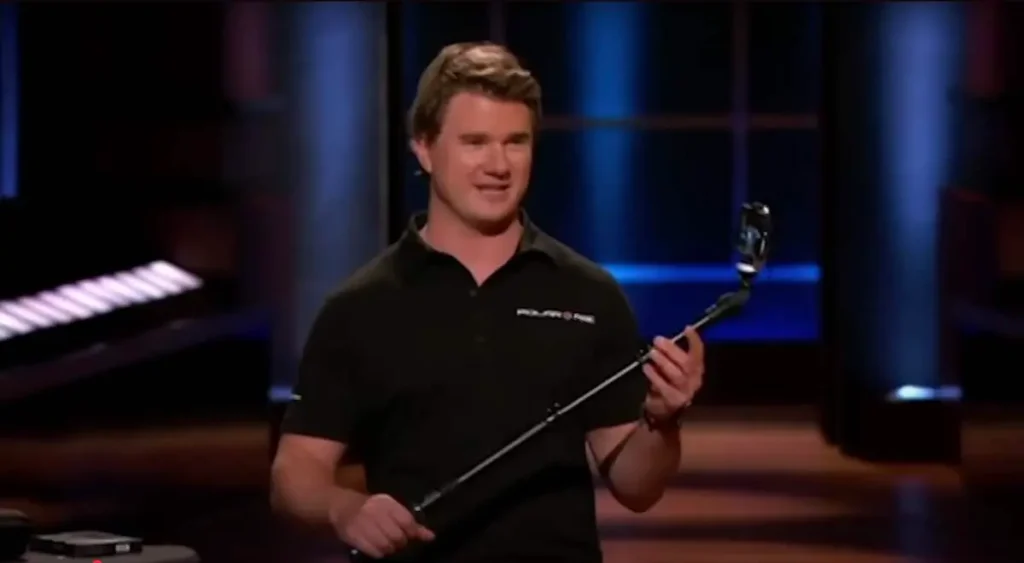
That is rare on the show. Founders usually hand over extra equity at a worse rate to get extra money. Overall doubled his investment at his own asking price, which tells you how the sharks read the business at the time.
Four of the five wanted in. Cuban opened at $500,000 for 10%. Daymond John countered at $500,000 for 15%, then came back with $1 million for 17.5%. Lori Greiner matched Cuban’s terms and offered herself as the route into mass retail. Robert Herjavec argued the company needed more money than it was asking for, and said he would put in $500,000 for 10% if another shark came in beside him. Kevin O’Leary was the only one out, calling consumer electronics too crowded.
PolarPro’s numbers on Shark Tank
The pitch was built on real trading history rather than a projection, which is why four sharks bid.
| Figure | What Overall told the sharks |
|---|---|
| Revenue in 2011 | $8,000 |
| Revenue in 2014 | $2.8 million |
| 2015 sales pace | $5.6 million |
| Profit expected in 2015 | About $300,000 |
| Retail doors | 1,200 independent stores |
| Products on sale | 31 |
| The ask | $500,000 for 10% |
| Deal agreed on air | $1 million for 20%, split between Cuban and Herjavec |
| Deal outcome | Never closed |
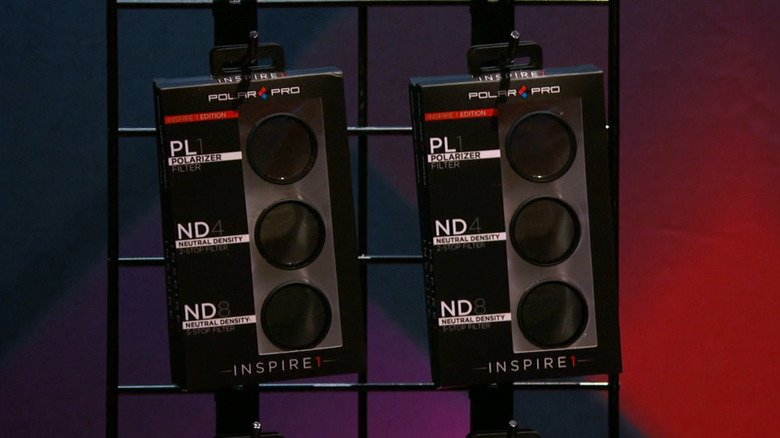
The profit line is what stopped the room. Three hundred thousand dollars on $5.6 million of sales is thin, especially for filters that cost about $12 to make and sold for $69.99 to $149.99. Overall’s answer was that more than $1 million was going straight back into tooling and product design. Drone filters were the top seller, and he was betting the drone boom would carry the company to $40 million or $50 million.
Did the Shark Tank deal actually close?
No. The handshake happened on camera, but the money never changed hands.
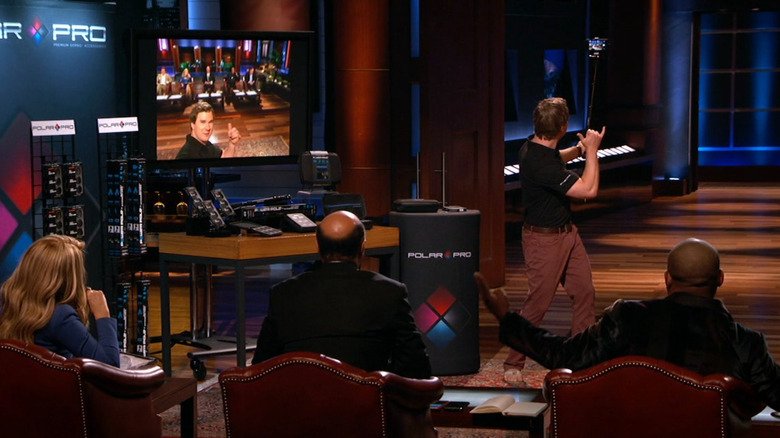
That is more common than it looks. A deal agreed in the tank is a verbal agreement, not a signed contract. Afterwards comes due diligence, where each shark’s team goes through the books, the contracts and the supply chain. Plenty of deals quietly die there. Both investors cooled on this one, and by that point the sales bump from the episode meant Overall did not need outside cash as badly as he had a few months earlier.
That outcome matters for the net worth question. No shark owns a piece of PolarPro. The 20% stayed with the founder, and every dollar of value built since has stayed on his side of the table.
What the episode was worth anyway
Season 7, episode 8 first aired on ABC on 13 November 2015 and drew 6.14 million viewers in the US.
The website went from six or ten people browsing at a time to roughly 9,000 at the peak, then settled at a steady 100 to 150. Retailers that had passed on the brand before started picking up the phone. For a company started with about $2,000 of student loan money, that exposure was worth more than the investment that never arrived.
What PolarPro sells now
Very little of what it sold on the show. GoPro filters are still in the catalog, but they are a small corner of a much wider range. The shift was partly forced, since GoPro began making filters for its own cameras, and a business built on one accessory had to become something bigger.
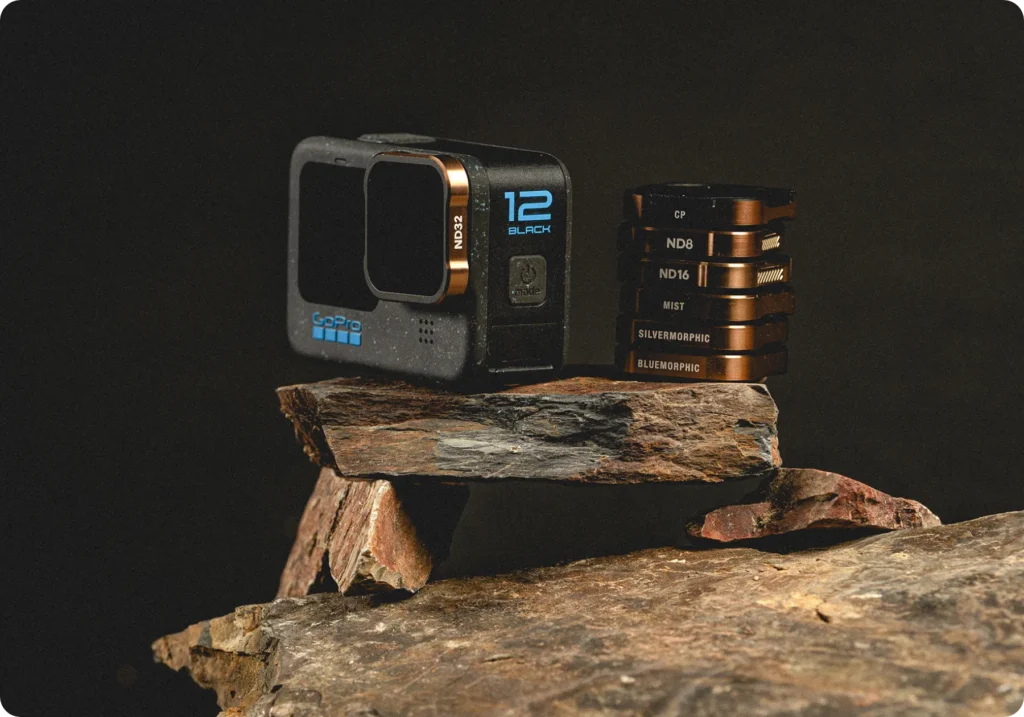
The heart of it now is premium camera filters: the Helix MagLock magnetic system, variable neutral density filters built with Peter McKinnon, everyday filters with photographer Garrett King, and polarizers with Chris Burkard. A variable neutral density filter, or VND, lets you dial down how much light reaches the sensor so you can shoot wide open in bright daylight. Around those sit matte boxes for film sets, LightLeak lenses that create a vintage film look in camera, LiteChaser cases that turn an iPhone into a rigged-up camera, and RoadRunner bags. Prices run from about $90 for a single threaded filter to $330 for a magnetic VND kit.
Everything is designed in house in Costa Mesa, and the company publishes running totals on its own site: more than 182,000 customers and close to 400,000 products sold.
What is Jeff Overall’s net worth?
Also unpublished, and almost certainly tied up in the company rather than sitting in cash.
Overall started PolarPro in 2011 during his senior year at UC Santa Barbara, after taping a DSLR polarizer over his GoPro to fix washed out footage of his ski runs. He was 26 when he walked into the tank. He never gave up the 20% the sharks were bidding on, and no outside investor has taken a public stake since.
So if the business is worth $5 million to $15 million and he still holds most of it, that equity is the bulk of his personal wealth. It is paper value until someone buys the company, which is where most founders of profitable private brands sit.
Is PolarPro still going?
Yes, and it is still independent.
New products keep arriving: LightLeak lenses in 2024, LiteChaser cases for the iPhone 17, filters for the DJI Osmo Pocket 4 and the Insta360 X5, and in 2026 the Mini MagLock system for the Leica Q3 and Fujifilm X100VI. Overall has since started a second venture in software for direct-to-consumer brands, and PolarPro keeps shipping.
Frequently asked questions
How much is PolarPro worth today?
There is no published figure, because the company is private. The only confirmed valuation is the $5 million set on Shark Tank in 2015. Judging by its sales and its current product prices, a realistic range today is $5 million to $15 million.
Did PolarPro get a deal on Shark Tank?
Yes, on air. Mark Cuban and Robert Herjavec agreed to $1 million for 20%, taking 10% each. The investment never completed after filming, so neither shark ended up owning any part of the company.
Who owns PolarPro?
Jeff Overall, who founded it in 2011 as a UC Santa Barbara student and runs it as CEO. No shark took a stake, and the company has stayed private and independent since.
What season and episode was PolarPro on?
Season 7, episode 8, first shown on ABC on 13 November 2015. It drew 6.14 million US viewers, with Mark Cuban, Daymond John, Kevin O’Leary, Lori Greiner and Robert Herjavec in the seats.
Does PolarPro still make GoPro filters?
Yes, though they are a small part of the range now. Most of the business is professional camera filters, matte boxes, iPhone filmmaking kits, and filters for DJI and Insta360 cameras.
Conclusion
PolarPro’s net worth is not a published number, because the company is private and always has been. The one valuation you can check is the $5 million the sharks agreed to in 2015, and since that deal never closed, the founder kept the equity. A decade of higher priced products and strong direct sales puts the business somewhere around $5 million to $15 million today. Anything more exact than that is guesswork.
Related Post:
Ta-Ta Towels Net Worth: What the Boob Sweat Brand Is Really Worth
Mural Painter Shark Tank Net Worth (2026 Update)
Toor Shark Tank Net Worth: What the Company Is Worth Today
What Is Mary Barra’s Net Worth? A Full Breakdown of Her Pay and GM Stock
Atlantic Candy Company Net Worth: What the Numbers Actually Show