
Ta-Ta Towels is worth an estimated $2 million as of 2026. The brand behind the wearable towel that keeps the chest dry has grown steadily since its founder, Erin Robertson, walked onto Shark Tank in 2018. The exact figure is an estimate, since the company is private and does not share its books. Still, the money story here is more interesting than a single number, so let’s walk through it.
Quick answer: Ta-Ta Towels is worth roughly $2 million. It is a privately held brand, so that figure is an informed estimate, not an audited one.
How much is Ta-Ta Towels worth?
The estimated net worth of Ta-Ta Towels sits at about $2 million. That covers the value of the brand, its inventory, its patents, and the sales it brings in each year across its own website and Amazon.
Annual sales have been reported at around $800,000 to $1 million in recent years. For a niche product built around one clever idea, that is a healthy business, and it has held up long after the TV cameras left.
It helps to know what “net worth” means for a small brand like this. It is not cash in a bank account. It is a rough guess at what the whole business would be worth if someone bought it today, based on what it sells, what it owns, and how strong the brand is.
Who is Erin Robertson?
Erin Robertson is the founder and inventor of Ta-Ta Towels. She lives in Los Angeles and, before starting the company, spent years working as a personal assistant, a job she did not enjoy.
The idea came out of a real, sweaty problem. One hot LA evening, Erin was getting ready for a date when her air conditioner broke. She could not stop sweating under her chest. She tried baby powder and tucking washcloths under her breasts, but nothing felt right or looked good.
After that night, she searched for a product that would fix the issue and found nothing she liked. So she borrowed a sewing machine, taught herself to sew by watching YouTube videos, and built her own prototype. Friends who tried it loved it, and that early feedback pushed her to turn it into a real business.
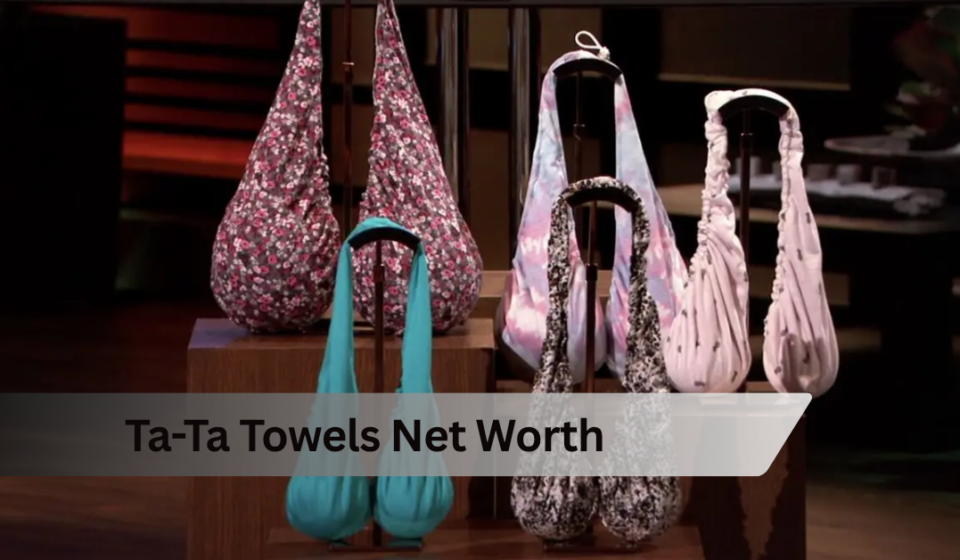
The product itself is simple and smart. It is a soft towel-style bra that loops around the neck and cradles each breast, soaking up sweat and helping prevent rashes. The tagline sums it up: “Keep them high, keep them dry.”
What happened on Shark Tank?
Erin pitched Ta-Ta Towels on Season 10, Episode 2 of Shark Tank in 2018. She asked for $200,000 in exchange for 10% of her company, which valued the business at $2 million.
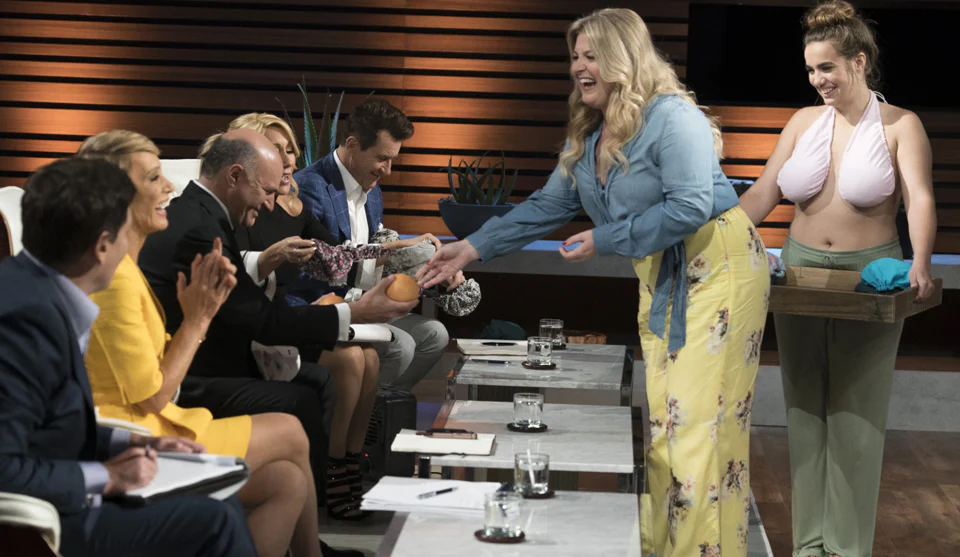
She brought models on stage to show how the product worked, and the moment turned memorable when Kevin O’Leary tried a version on with fruit to feel the effect for himself. The room laughed, but Erin quickly got serious about her numbers.
Her margins impressed the Sharks. She explained that each towel cost about $24 to make and sold for $45, with a maternity version at $55. On paper, that is a strong markup.
The pitch: $200,000 for 10% equity, a $2 million valuation. Strong margins, but a recent sales drop made the Sharks nervous.
Then the mood shifted. The Sharks learned that sales had fallen sharply, from about $1.1 million in 2017 to roughly $180,000 in 2018. She also had around 10,000 units sitting in inventory. That combination raised worries about cash flow and whether the early buzz had faded.
One by one, most of the Sharks dropped out. Mark Cuban went out first, and Barbara Corcoran, Robert Herjavec, and Kevin O’Leary followed. That left just one interested investor.
Did the Lori Greiner deal close?
No, the deal with Lori Greiner never actually closed. On the show, Lori made the only offer: $200,000 for 50% of the company. She argued that the business had stalled and would need her full team to get moving again, which is why she wanted so much equity.
Erin pushed back. She owned 90% of the company and had another partner, so giving away half was too much. The two settled on air at $200,000 for 40%, and Erin accepted.
After filming wrapped, though, the agreement fell apart. Lori often prefers to move manufacturing overseas to cut costs, while Erin was set on keeping production in Los Angeles. That difference is a common reason her deals do not close, and it appears to be what ended this one.
The handshake on TV was $200,000 for 40%. Off camera, the deal never went through, likely over where the towels would be made.
Here is the surprising part: not closing the deal did not sink the brand. The exposure from appearing on the show gave Ta-Ta Towels a big lift. Erin sold through her inventory and kept growing, all without giving away a large chunk of her company.
How does Ta-Ta Towels make money now?
Ta-Ta Towels makes money by selling directly to customers through its own website and on Amazon. The business is still family-run and still sews its products in Los Angeles, which Erin has called one of her proudest achievements.
The brand also grew well beyond its first product. What started as a single towel bra is now a full line. Here is how the range has expanded:
- The original Ta-Ta Towel, the neck-loop towel bra that started it all, sold at around $45.
- A maternity and nursing version for pregnant and breastfeeding customers, priced higher at about $55.
- Everyday apparel, including tube tops, shorts, and head towels in a range of colors and prints.
- A spin-off line aimed at men, extending the same sweat-wicking idea to a new audience.
A patent sits behind the core product too. The wrap-around towel-bra shape and its moisture-wicking function are protected, which makes it harder for copycats to sell the exact same design. That legal protection is part of what gives the brand its value.
You can see the current lineup and pricing on the official Ta-Ta Towels site, which is the best place to check what is in stock and how much each item costs today. Sizing runs across a wide range, from cup sizes C to H, which helps the brand reach the customers it was built for.
Selling straight to customers matters for the money side. When a brand skips the middleman and sells from its own site, it keeps more of each sale. Pair that with strong margins and repeat buyers, and a niche product can turn into a steady business.
Why the net worth is only an estimate
Ta-Ta Towels is a private company, so it does not publish financial statements. That means no one outside the business knows the exact profit, costs, or bank balance. Any net worth figure you see is an educated estimate built from public clues like reported sales and the product range.
This is normal for small brands, especially ones that skipped an investor and stayed independent. Without a public buyout or filing, the true number stays behind closed doors.
So treat the $2 million figure as a reasonable ballpark, not a precise accounting. It reflects a brand that found a real problem, solved it well, survived a rough sales year, and kept selling for years after its television moment. For a company built around one honest idea, that is a strong result.
Frequently asked questions
Is Ta-Ta Towels still in business in 2026?
Yes. Ta-Ta Towels is still active and selling in 2026 through its own website and Amazon. The company remains family-run and still makes its products in Los Angeles.
Did Ta-Ta Towels get a Shark Tank deal?
Erin Robertson agreed to a deal on air with Lori Greiner for $200,000 in exchange for 40% of the company. However, that deal never closed after filming, so no Shark ended up investing.
Who owns Ta-Ta Towels?
Erin Robertson founded and owns Ta-Ta Towels, along with a business partner. Because the Shark Tank deal fell through, she kept the large majority of her company.
How much does a Ta-Ta Towel cost?
The original Ta-Ta Towel sells for around $45, and the maternity version costs about $55. Prices can change, so the official website has the most current pricing and stock.
Why did the Lori Greiner deal fall apart?
The deal likely collapsed over manufacturing. Lori often prefers overseas production to lower costs, while Erin was committed to keeping her towels made in Los Angeles. That mismatch ended the agreement.
Conclusion
Ta-Ta Towels is worth an estimated $2 million in 2026, with yearly sales in the high six figures. Founder Erin Robertson turned a sweaty date-night problem into a patented product, pitched it on Shark Tank, and kept the company growing even after her deal with Lori Greiner fell through. The figure is an estimate because the brand is private, but the takeaway is clear: a simple, useful product with good margins can build lasting value on its own.
Related Post:
Toor Shark Tank Net Worth: What the Company Is Worth Today
Bob Barker Company Net Worth: What the Numbers Really Mean
What Is Mary Barra’s Net Worth? A Full Breakdown of Her Pay and GM Stock
SnapClips Net Worth: Where the Shark Tank Barbell Collar Company Stands Now
Atlantic Candy Company Net Worth: What the Numbers Actually Show